Cost-Effective Ways To Reward Your Employees

If you want to drive performance, engage employees and drive results…non-cash rewards are the most effective tools in your toolbox.

~Kimberly Abel-Lanier of Maritz Motivation Solutions

Underlying the theories of motivation comes the idea that rewarding your employees in meaningful ways can lead to higher satisfaction. These meaningful rewards are driven by the internal currencies of each individual. For instance, your senior employee may consider flexible hours as more valuable than merit pay.

On that note, here are 6 budget-friendly ways to reward your beloved employees:

1. FLEXIBLE HOURS

One key feature that Singapore employees possess is that most of our time revolve around work. My first job followed a 44-48 hours of work each week (including overtime) similar to how most companies operate. Due to the relatively long and stressful shifting hours at the office, my days off work were precious. After walking away from the office set-up and transitioning to freelancing, I realized that flexibility in time weighs more than any cash incentives I received. Being able to have a flexible timetable gives you the opportunity to do more of what you love.

So if your company works on a fixed schedule, perhaps you can incorporate a flexitime incentive whereby excellent employees can control their working hours for the following month.

2. RECOGNITION AND CERTIFICATE

A simple act of recognition goes a long way. As David Ciccarelli, co-founder of Voices.com, once said: “Something all bosses can do that doesn’t cost anything but means the world to people is recognition for their contributions to the organization.”

You can personally acknowledge the achievements and efforts of your employees thru group memos, writing an email, handing a personal note, or awarding a certificate.
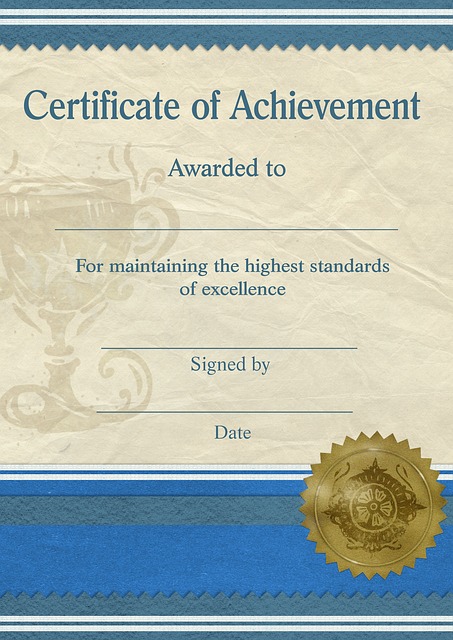
Image Credits: pixabay.com

Image Credits: pixabay.com

Remember how proud you were in primary school when your teacher proudly bestowed you with a certificate for performing well in class? Replicate those emotions by presenting a special signed certificate to your best employees once a month. The amount of effort you put on the presentation assembly will make it all worth it.

3. EXTRA PAID VACATION DAYS

Without the slightest doubt, having extra paid vacation days are some of the most wonderful rewards an employee can receive. Award your best performing employees with additional vacation days each year by turning it as a friendly competition. For example, the employee that acquires the highest sales on a quarter will receive extra 2 paid vacation days for the year.

Image Credits: pixabay.com

Image Credits: pixabay.com

This may increase the productivity, satisfaction, and morale of your team.

Sources: 1 & 2

Read More...

Stop These 5 Unhealthy Financial Practices

1. SHOPPING UNPREPARED

If you come to a store unprepared, there is a possibility that you will walk out with unnecessary items that are beyond your budget. Whenever I think about this scenario, I remember my aunt. My aunt loves spontaneous shopping trips fueled by her boredom. As a result, she will always go out with nothing but her credit card. She justifies her actions with this statement: “Shopping makes me happy and besides this is just cheap.” But those “cheap” things can add up to a huge sum of debt.

To avoid this, list the things that you need to purchase before going out. Be as detailed as you in order to get a rough idea of how much you will spend. For instance, if you are making a grocery list, do not forget to note how many items you need and how much is the price range for each.

2. BLAMING OTHERS

Q: What is worse than personal destructive money habits?
A: Not owning up to it.

If you are fond of blaming others for your overspending and your negative financial situation then you do not take responsibility for your actions. Thus, you will ignore or deny its consequences. This practice can not only hurt your finances but also your entire life.

Save your life! Be accountable for your actions and start taking necessary actions.

3. WATCHING TOO MUCH

Tom Corley researched the differences between wealthy and low-income individuals for five years. Here are his findings:

a. 67% of the wealthy watch 1 hour or less of T.V. per day vs 23% of the low-income earners

b. 63% of the wealthy spend less than 1 hour per day on recreational Internet use vs. 26% of the low income earners

Spending more time on the television or social media will leave you less time to do more productive things. These productive things such as reading to learn and networking to build relationships will help you create a brighter financial future.

4. PAYING BILLS LATE

When paying the bills late becomes a part of your routine, it can hurt your finances in several ways. Firstly, you may spend the money you are supposed to use for paying the bills. Secondly, you are bound to pay the late payment fees and interest rates for your credit cards. This is why you must prepare money for your bills accordingly by noting them down at the beginning of the month. Put it on your working desk or create a file for it.

If you have a monthly bill, you may try a trick called half payments. For half payments, you prepare the payment for the bill by subtracting half of the bill’s amount to your bank account per two weeks (bi-weekly).

5. AVOIDING THE TRUTH

Over-spenders are usually irrational and impulsive when they are shopping. They usually give absurd rationalizations for their purchases especially when they are confronted about it. Simply put, they do not want to talk about their spending habits as they are ashamed about their financial situation.

This practice only brings harm in the long run. The more you cover up your overspending habits, the more it prevents you from getting professional help to fix your finances.

Image Credits: pixabay.com

Image Credits: pixabay.com

Read More...

Money-Saving Parenting Hacks That Work

MAKING YOUR OWN SWIVEL ROCKER

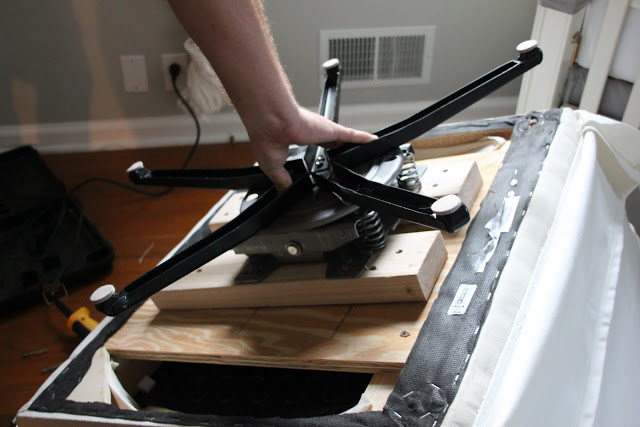
Looking for a great way to save on your nursery swivel rocker? Instead of looking at the baby aisle, try looking for the office aisle. Consider purchasing a pre-owned armchair online and adding your own rocking base to it. You will not only save a lot of cash but you can also have an unforgettable DIY experience with your spouse.

Simply follow the instructions – here.

ORDERING GROCERIES VIRTUALLY

Image Credits: pixabay.com

Image Credits: pixabay.com

One marketing strategy that groceries employ is targeting the children’s interest because they play an influence on what goes inside the carts. Supermarkets purposely place cereals, toys, and sugary treats at a kid-friendly level. If you cannot leave the kiddos alone, opt for shopping online.

A revolutionary feature of most “big name” grocery chains in Singapore is that they offer access to online grocery shopping. This can help you to save money by religiously sticking to your list (or budget), by avoiding the transportation costs, and by preventing the impulsive buying power of your children.

For everyday shopping, I recommend fairprice.com.sg as they have regular deals and discounts. As for affordable organic produce, you can visit bestorganicfood.sg.

STOCKING UP FOR KIDDIE PARTIES

Image Credits: pixabay.com

Image Credits: pixabay.com

Children’s toys, clothes, and other fun items go on sale from June to August due to the Great Singapore Sale. Take advantage of this annual event by stocking up on a variety of inexpensive gifts that you can give on kiddie parties or even Christmas. Set a limit for every individual to avoid going beyond your budget.

KEEPING A PIGGY BANK

Image Credits: pixabay.com

Image Credits: pixabay.com

Be the good example to your children by putting some of your loose change into a money jar. Since most young children want to be like their parents, seeing you do it will provide them with encouragement to save.

After serving as an example for a month, provide your child with his or her very own piggy bank. Have your child draw the picture of the specific toy on the side of the piggy bank. Through this, they will be motivated to save in order to get what he or she wants.

USING FREE RESOURCES

Image Credits: pixabay.com

Image Credits: pixabay.com

Your nearby public library can serve as your savior during those school-free days. Not only can you borrow children’s books but you can also rent CDs/DVDs for the whole family – at no cost. Aside from these, the public libraries also offer a wide array of free events that your family can join. Visit nlb.gov.sg to stay updated with the National Library Board’s events calendar.

BREASTFEEDING YOUR BABY

Image Credits: pixabay.com

Image Credits: pixabay.com

One of the empowering things that only women can do is to breastfeed their baby. As much as you can, opt for breastfeeding because it will not only be healthy but also be able to save you as low as S$1,500 per year.

If you want to save even more on breast pump, borrow from your family or friends but make sure to change the plastic attachments. You can buy those for far less than a brand new pump.

Sources: 1 & 2

Read More...

3 Amazing Museums In Singapore That Offer Free Admissions

When I was an adolescent, I perceived museums as fancy institutions which superior intellects frequented. The only time I get to visit one is when the school requires us to go on educational trips. However, times have changed. Technological advances paved way for museum to share their unique pictures on social media. The public interest for art has risen. Let us be honest, you probably saw those hippie youths taking their #OOTD snaps at the famous local museums.

Aside from the picturesque interiors, museums are places in which cultural, scientific, and artistic treasures are displayed. Each one has its own characteristics and values. Personally I find these local museums to be worth my time:

1. ASIAN CIVILISATIONS MUSEUM

Website: acm.org.sg

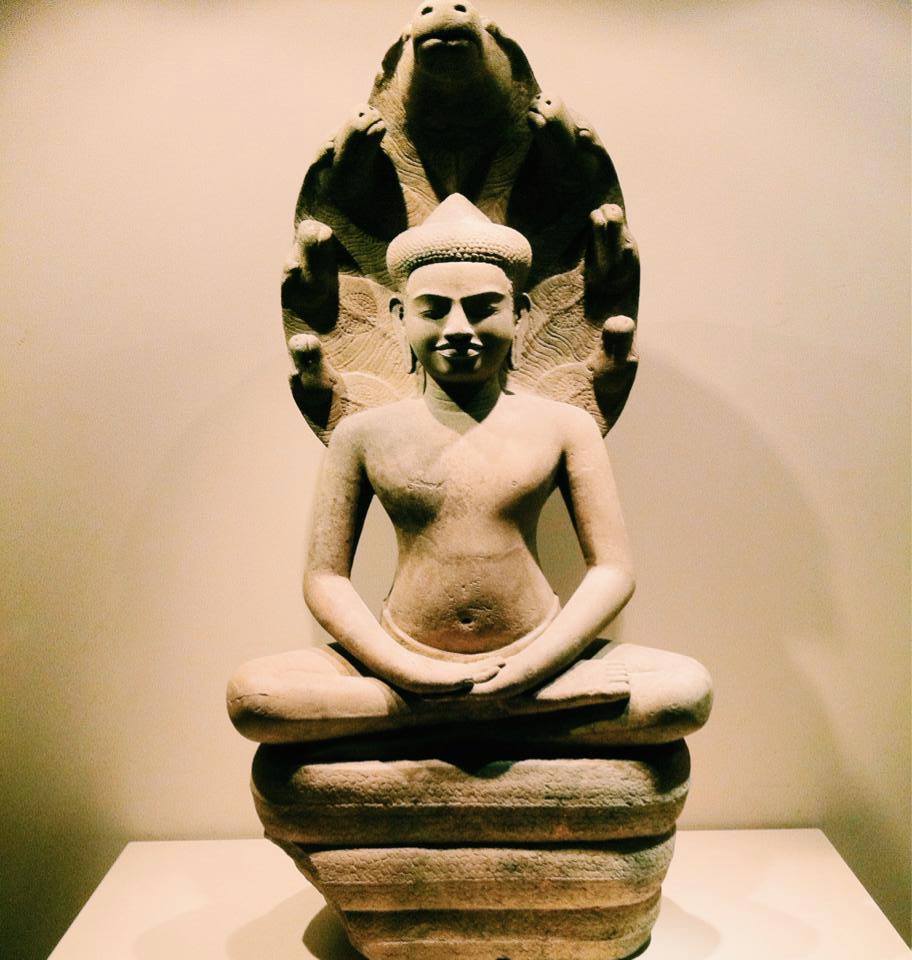
Asian Civilisations Museum (ACM) is my favorite local museum. Nestled at the mouth of the Singapore River, ACM will take you on a journey of historical discovery as they preserve the heritage of Asia. ACM’s 14,000 square meters space are filled with 11 thematic galleries that boasts with about 1,300 artifacts from China, South Asia, Southeast Asia, and West Asia. During my visit there, I was amazed the abundance and diversity of the Buddha statues as well as the 12 zodiac animal heads donated by Jackie Chan.

To shake things up, they accompany the permanent exhibits with special exhibits that are changing throughout the year. In fact, the current exhibit now is called “Once Upon a Time in Asia: The Missing Mouse”. It is a free exhibit that is recommended for children and the young at heart.

Rates:

Citizens & Permanent Residents: FREE
Visitors aged 6 and below: FREE
Foreign students, seniors, and PWDs: S$4
Others: S$8

2. SINGAPORE ART MUSEUM

Website: singaporeartmuseum.sg

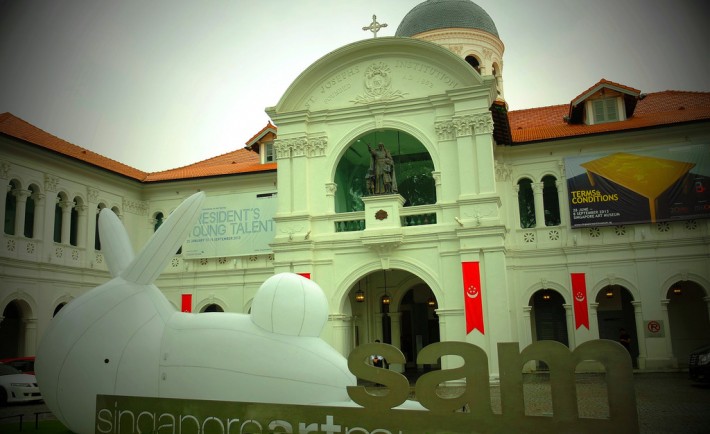
Probably the most popular museum among the youths is the Singapore Art Museum (SAM). SAM houses a great collection of contemporary Southeast Asian art ranging from sculptures and paintings to installation art and moving media. They regularly collaborate with the leading international museums to cover both the local and international art practices.

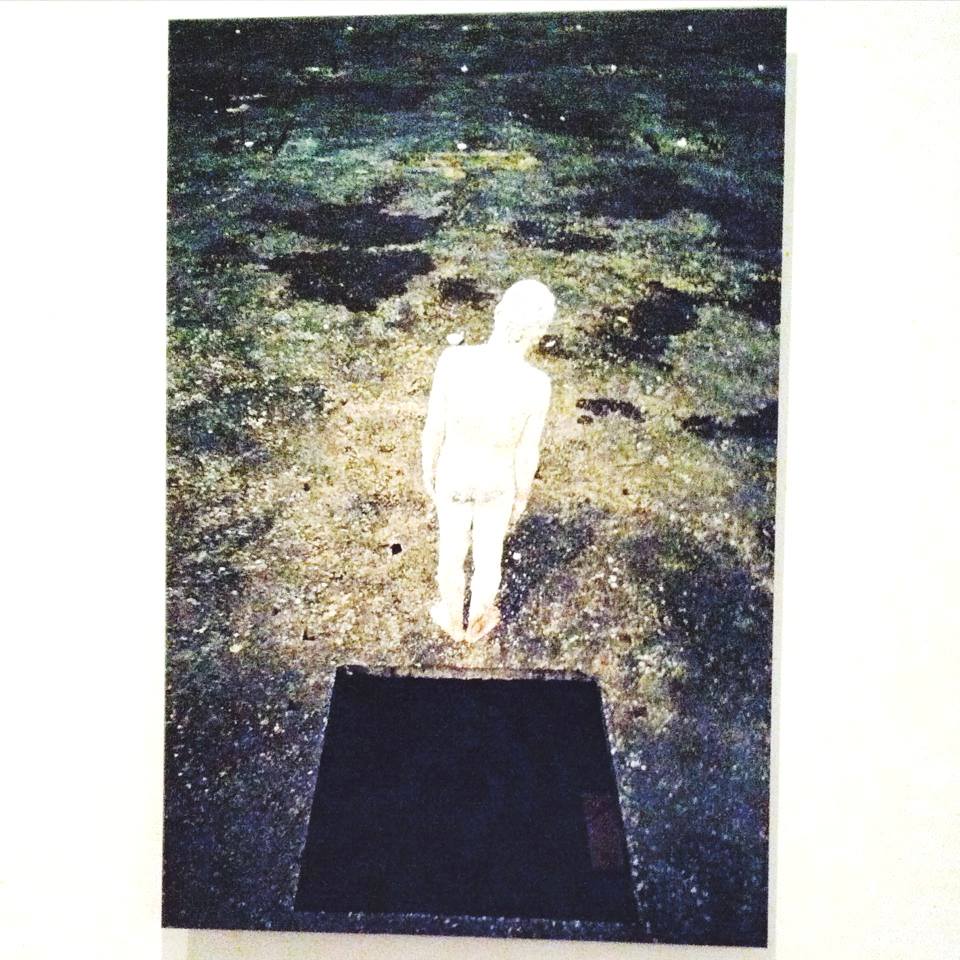
Exhibitions change every few months. At the time of my first visit, I got to enjoy an interesting exhibition called Medium At Large. Now, they are showing the 5 Stars (Art Reflects on Peace, Justice, Equality, Democracy and Progress) exhibit. In this exhibit, I was particularly amazed with their larger than life art installation called the “Bloodline of Peace”.

Rates:

Citizens & Permanent Residents: FREE
Visitors under 6 years old: FREE
Foreign students, seniors, and PWDs: S$5
Others: S$10

*Everyone gets to enter for free every Friday from 6pm – 9pm.

3. NATIONAL MUSEUM OF SINGAPORE

Website: nationalmuseum.sg/

What do you expect from Singapore’s oldest museum? Nothing but prime history and culture of course. If you are interested in Singapore’s rich history, this museum shall be on the top of your list. Established in 1887, the National Museum of Singapore fuses the elegant neo-classical building with the new additions of glass and metal.

While visiting National Museum of Singapore I greatly enjoyed the “Singapura: 700 years” Exhibition. It consisted of six nostalgic sections from the Archaeology in Singapore to the Independent Singapore. Currently, they are displaying the “Celebrating Radio: Sounds” until July 17, 2016.

After indulging on art and history, satisfy your tummy with their selection of cafes and restaurants. Or, visit their retail space to pick up a cultural souvenir.

Rates:

Citizens & Permanent Residents: FREE
Visitors aged 6 and below: FREE
Foreign students,seniors, and PWDs: S$5
Others: S$10

Sources: 1 & 2

Read More...

Stop Worrying About Making Ends Meet, Know Where Your Money Goes

Living barely within your income is not a laughing matter! When you are living from paycheck to paycheck, your life is filled with constant stress, worry, and dread. It is a struggle to gain control of your money and your commitments.

How did you end up like this?

For starters, you not be planning for your future and only thinking about the current situation. With this attitude, do not be surprised if you will be working beyond the retirement age! Another reason maybe due to your history of overspending. Perhaps you were spending too much before that you fell into an avalanche of debt and can never move pass it.

In order to cease your worries, a huge turnover can be money flow management. You must give conscious effort to know about where your money flows in and out. Once you have control over your money flow. Then, you will be able to create a systematic financial operating system that consists of: money flow management and budgeting.

Start by identifying your fixed expenses (essentials), variable expenses (non-essentials), and savings (investments) first. Organize these items in a physical ledger or a budgeting App such as EXPENSIFY, MONEYWISE, POCKET EXPENSE PERSONAL FINANCE, and MINT.

Allocating your money to fixed expenses shall be your top priority. Fixed expenses include the goods and services that you cannot live without. Your rent, utility bills, school fees, and transportation costs fall under this category. Since our spending habits and personal needs are different, you must include the categories that are relevant to you. For example, a hand phone is a necessary means of communication. However, the type of hand phone that you bought makes all the difference.

Do you really need the latest Smartphone released by Apple when your current hand phone is working just fine? If you are purchasing it for vanity’s sake then it becomes a non-essential.

Non-essentials or variable expenses include the goods and services that do not compromise your survival. This category includes your clubbing costs, shopping sprees, and overseas vacations. Always save your non-essentials fund for last to prevent becoming broke.

The last category is your savings. Your savings not only protect you from unwanted events but it also prepares you for the future. It includes your investments in stocks, bonds, properties, or mutual funds (items that generate profit). Once your done with your fixed expenses, come up with a well-thought-off amount for your savings that you can consistently maintain.

Some people believe that purchasing a car is considered as investment but in respect to the categories of the “money flow management”, it is not. You see, every time you drive your new vehicle, its value depreciates. It is more of an asset that can sometimes be used as a collateral when you take out a loan.

Image Credits: www.pixabay.com

Image Credits: www.pixabay.com

Always ensure that pay your bills on time, otherwise it will defeat the purpose of the above system. With a smart way of prioritizing your expenses and budgeting your money, you will find yourself in a more stable position in no time!

Read More...