Budgeting 101: Taking Over Your Financial Life

Have you created a budget in the past? Were you able to firmly follow through? What were the obstacles that you have experienced?

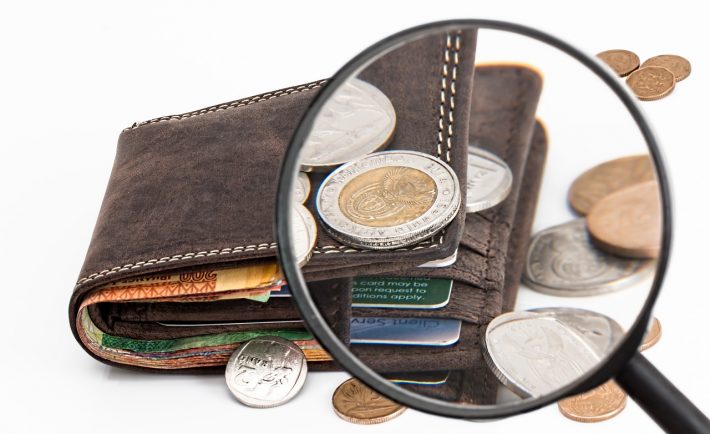
It comes as no surprise that budgeting is no easy feat! It is a strategic task that encourages cutting down of your expenses. Furthermore, you must find a way to still enjoy the money you earn. Striking a balance between your needs and wants can be stressful for some.

So, where must you start?

Start accept your accountability over the choices you make. Every action has an equal reaction towards your wealth. Regularly subscribing to designer shoes can take a toll on your income. While, decreasing your trips to the coffee shop can help save cash. With this form of thinking, you will practice financial self-awareness.

Financial self-awareness comes the observation of thoughts, feelings, and actions surrounding money. For instance, you will be more aware of temptations such as the “cheap” 24-hour marketplaces.

TYPES OF BUDGETING

A. Traditional

A Traditional Budget maps out a plan for how you expect to spend your money. It indicates the amount of money you allot during a specific period of time for a specific financial obligation. How much will you set aside for rent, entertainment, or insurance?

B. 50/20/30 Rule

The 50/20/30 rule is a proportional guideline that helps you establish good habits through the alignment of saving goals. 50% of your income shall go to essentials, 20% of your income shall go to savings, and 30% of your income will be spent on the unnecessary personal expenses.

C. Envelope Method

Envelope method is a simple way introduce you to budgeting. Begin by track the last month’s spending. Highlight your fixed and variable expenses. Then, devise a plan that will consist of different categories. Segregate each category into various envelopes. You must strictly follow through the allocation of each envelope. Do not get money elsewhere.

D. Event-based Budgeting

The last type of budgeting revolves the life events such as weddings, funerals, vacations, and special holidays. Tweak your budget in accordance to these events.

Image Credits: pixabay.com

Budgeting lies at the foundation of each and every financial plan. It is about understanding how much money you have, where it goes, and how to allocate those funds. Best of luck! 🙂


Sources: 1 &2

Read More...

Choosing Trading Indices or Individual Stocks and Shares – Which Is Best Suited to You?

Indices versus stocks and shares is a tricky question. You can trade both, but most people prefer to stick to one or the other. Let’s take a look at both and discuss the pros and cons.

What are Indices?

Indices are compilations of stocks and shares. The FTSE 100 is an index of the top 100 companies listed on the London Stock Exchange. There are many others, including the S&P 500 Index, the Hang Seng Index, the Dow Jones Industrial Average, the NASDAQ 100 Index, and so on.

An indices performance is measured in points. For example, if the FTSE 100 goes up by 56 points, the overall value of the companies listed in the index has risen in value. When the value of stocks and shares fall, the index loses points.

When you purchase shares in the FTSE 100, you are essentially buying shares in ALL the companies listed in that index. The value of an index is derived from the average value of each company or entity in the index. If you elect to purchase shares in a single company, the value of your investment goes up or down according to the performance of that company.

The Benefits of Trading Indices

Trading in indices is more cost-effective than trading in individual shares. If you buy shares in the FTSE 100, you’re effectively buying shares in each of the listed companies. To buy individual shares in each company would be very expensive.

Trading indices can offer a far greater degree of diversity. You can spread your money across multiple indices, which also spreads the risk. If you place all your eggs in one basket by buying shares in a limited number of companies, the risk is far greater.

Risk Management

Stocks often rise and fall based on news reports, politics, financial statements, etc. If a company’s shares take a nosedive because they were caught hiding toxic assets in the Cayman Islands, it will have a dramatic effect on the company’s share value, and not for the better!

When you trade on indices, you are betting on whether the value of the indices will rise or fall in the same way forex traders bet on whether a currency pair will rise or fall in value. If you sell an index at a higher price than you bought it, you make a profit and vice versa. When the price of an index rises, more investors are buying than selling.

Whereas stock prices in individual companies reflect the performance of that company, indices reflect wider market sentiments. For example, the day after Theresa May called a snap election, the FTSE 100 had fallen by 180 points, which saw £45.7 billion wiped off valuations.

In most cases, trading on indices is less risky than investing in individual stocks and shares, but there are always exceptions to the rule. For example, the Dow Jones fell by 22.6% on Black Monday in 1987, so never rest on your laurels.

Read More...

5 Secret Features Of The Singapore Currency

Whether you call it SGD or Sing-dollar, Singapore Dollar is our country’s official unit of currency. It consists of paper notes and coins. Paper notes are divided into S$2, S$5, S$10, S$50, S$100, S$500, S$1,000 and the rare $10,000. While, the coins denominated in 5 cents, 10 cents, 20 cents, 50 cents and S$1. All these money hold their very own secret features.

Read through the post to find out more.

Image Credits: Aleksandr Zykov via Flickr Creative Commons

#1: I AM STILL STANDING

Grab a S$5 note from your wallet. Do you see the Tembusa tree printed on it? Believe it or not, that tree is still standing in the Botanic Gardens. It is believed to be at least 200 years old. Imagine the wonders it holds!

#2: THE STRONG SHALL PREVAIL

Ever wondered why polymer banknotes exist? For starters, these plastic notes are water-proof. Not only can a polymer notes survive a washing machine spin, but it can also survive being forgotten in your pockets for a long time. According to the the Monetary Authority of Singapore (MAS), polymer notes last three to four times longer than their paper counterparts.

What is more impressive? Polymer notes have ingredients that are not available commercially. This is a way to prevent production of counterfeit notes.

#3: SELL NOT THY JEWELS

Rocking accessories made from or resembling Singapore coins sounds pretty cool! However, wearing these jewelries may land you at the wrong side of the law. Under Singapore’s Currency Act, it is illegal to “mutilate, destroy or deface” any form of Singapore currency. Be ware as offenders can be fined up to $2000!

#4: THROUGH THE MAGNIFYING GLASS

The seemingly unnoticable “line” at the top of every banknote is actually a microtext. You do not believe me? See for yourself! Get a magnifying glass from your father’s tools and take a closer look. At the top left-hand side of any note, the microtext shall state: “MONETARYAUTHORITYOFSINGAPORE”. Interesting way to hide your name, MAS!

#5: YOU CAN HAVE A REPLACEMENT

Have you accidentaly tear up one of your paper notes before? You are not the only one! A S$50 with a missing corner is practically worthless. Fortunately for you, you can exchange your note at the local banks.

What is the catch? Firstly, you must present at least two-thirds of the original note for a full refund. Lastly, you must provide evidence that you did not intentionally destroy your banknote.

Image Credits: Narin BI via Flickr Creative Commons

I hope that helps! 🙂

Sources: 1 & 2

Read More...

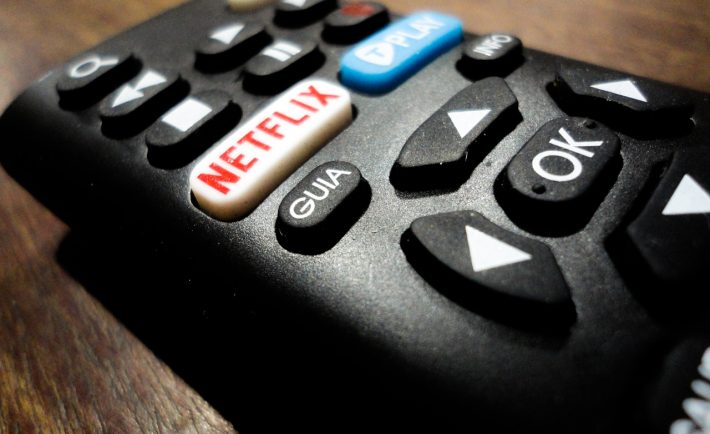
Free And Useful Tips For A Netflix Addict

Are you addicted to binge-watching on Netflix? I know I am!

There is no denying that the term “Netflix and Chill” is embedded in our Urban Dictionary. Netflix is one of the good things that happened to our modern generation. As we all know, good can always be better! Continue reading on to improve your Netflix experience.

#1: THE NETFLIX ROULETTE

Are you tired of getting suggestions related to your last Chick Flick marathon? Or, are you indecisive when it comes to finding the “perfect” movie for your first date? Today is your lucky day!

It is difficult to scan over 4,000 titles just to find an interesting series or film option. Fortunately, there is a digital tool that will help you randomize your searches. Flix Roulette can filter by director, actor, and keywords to help pinpoint a suitable series or movie. See for yourself!

#2: CLEAR YOUR HISTORY

Imagine promising to your spouse that you will re-watch Ant-Man together. The following night, you had to pull an all-nighter to finish an important assignment. As a reward, you decided to watch three Paul Rudd movies including Clueless, Knocked Up, and Ant-Man. How can you interfere with Netflix’s algorithm to spare your partner’s feelings?

Image Credits: Gage Skidmore via Flickr Creative Commons

Fret not, my friend. You can selectively delete your history. Simply follow these steps to remove any of your misdeeds.

#3: THE STREAM OPTIMIZATION

There are two ways to optimize your streaming experience without breaking the bank. Firstly, you can schedule your binge-watching sessions during off-peak periods. Trends have shown that fewer users are online early in the morning or very late at night.

Secondly, you may manage your streaming when buffering occurs. Access the Netflix stream manager by Shift + Alt or Shift + Opt (for Mac users). This will take you to buffering solutions and other streaming options. Unfortunately, you may have to sacrifice the picture quality to get a faster streaming rate.

#4: ELIMINATE THE MOOCHERS

As a kind individual, you may have unwittingly shared your Netflix account and password to your social circles (including ex-lovers). Their terrible viewing habits may hinder not only your streaming algorithm, but also cost you a lot. You can avoid these circumstances in one fell swoop! Simply go to My Account and click Sign out of all devices. Isn’t it neat?

Image Credits: pixabay.com

Have fun binge-watching! 🙂

Sources: 1 & 2

Read More...

Money Lies That You Probably Believe

Truly, these lies may be holding you back from financial success.

I DO NOT NEED TO SAVE A LOT FOR RETIREMENT

In is evident that many senior citizens work beyond their 70’s. To survive their daily expenses, some Singaporean seniors acquire odd jobs. With this environment, you probably think that you can continue working beyond your retirement years. However, humans are subject to their declining health over time.

A senior adviser at a wealth management firm, Mr. Ken Moraif, once elaborated how dangerous it is to work for a lifetime. “With no savings, if our health fails, we not only have lost our income but we now also have a large expense.” The combination of these two factors can trap you into a bad financial situation.

LOW-INTEREST SAVINGS ACCOUNT IS AN INVESTMENT

When you think of savings, what is the first thing that pops into your mind? Is it a savings account or an emergency fund? Well, thinking that your stored cash is an investment is somewhat wrong.

Having excess cash to fulfill your emergency and living expenses is great. But, do not rely too much on your low-interest savings account. The value of your money kept there may decrese over time due to inflation. What shall you do instead? For starters, you may put a decent amount of your money into basic investment vehicles such as a mutual fund. Do your research!

I WILL BE EARNING MORE MONEY IN THE FUTURE

Do you plan for your future operating under a faulty assumption that your gross income will increase? I mean, it is basic Maths right? You get promoted as time passes. For some, believing these things can actually turn into a reality. How about others who stay in a position for a decade or so?

Believing that you will earn more money in the future without actual basis can lead to major purchases that you cannot afford. Can you really buy another HDB flat or a new car?

Image Credits: pixabay.com

We all want to assume that we will compensated as time goes on, but there are no guarantees! Your company may start laying off workers or even dissolve. Moreover, a critical illness may halt your career. To achieve financial freedom, it is better to stay within your means. This way, you can treat any pay increases as bonuses.

FRUGALITY IS ENOUGH TO SAVE YOU IN THE FUTURE

I considered myself as a frugal being once. Then, certain life problems came my way. My mother had an operation, which occurred simultaneously with our home renovation. My savings account became significantly slimmer afterwards. I realized that frugality alone cannot make a positive difference. I need to find a way to expand my opportunities to continue growing my wealth.

Directing all your energy towards ingenious ways to limit your expenses can limit your life. Instead, consider frugality (i.e., a means to eliminate waste) as a long-term financial goal. For instance, you may lessen your trips to Starbucks due to the free coffee provided by your workplace.

I AM NOT WEALTHY ENOUGH TO INVEST

It is common to perceive yourself as a person without the ability to invest. If you have money to satisfy your regular thirst for Starbucks then, you have enough money to invest. If you spend your money on designer watches then, you have enough money to invest. Do not get me started with spending your money on trendy Netflix or hefty shoes!

Image Credits: pixabay.com

The key to financial freedom is not how you perceive the prowess of your money, but how you spend it. You will find that you have sufficient funds to invest when you prioritize your long-term goals over buying unnecessary material goods.

Sources: 1 & 2

Read More...