That applies to the employer-employee relationship. Many people make the mistake of treating their employees like friends, and it almost always ends up causing problems.
Reasons why not to be friends with employees
When you’re friends with someone, it’s difficult, to be honest with them.
You might feel like you’re hurting their feelings or that you’re being too blunt. This can lead to a skewed view of their performance and make it hard to provide them with the feedback they need to improve.
And if things go wrong? It can be pretty awkward to have to discipline or fire your “friend”. Suddenly, all those lunches and after-work drinks become a lot less fun. Friendship in the workplace is simply not scalable. It’s hard enough to manage employees without having to worry about maintaining a friendship as well.
Common scenarios that should be avoided
When it comes to the employer-employee dynamics, there are a few scenarios that should be avoided to maintain a clear line of authority.
For example, don’t let the employee come by your office and shoot the breeze for an hour every day. This will only blur the boundaries and make it difficult for them to take your direction seriously.
This can also easily lead to nepotism, which is a conflict of interest. Remember that you are their boss, not their buddy and that you need to maintain a level of professionalism at all times. By keeping these things in mind, you can create a healthy working relationship that will be beneficial for all.
How to keep up a professional relationship
Image Credits: talknowapp.net
As the boss, you need to stay professional in your dealings with your employees.
This is a business relationship, not a personal one. Here are some tips for how to keep things professional:
You’re in charge, so don’t be afraid to assert yourself.
Your employees are there to do a job, not be your friends.
It’s best not to get too “close” to your employees—you don’t want them (or others) to feel uncomfortable.
Benefits of maintaining healthy boundaries
Maintaining healthy boundaries with your employees has a lot of benefits.
For one, it prevents preferential treatment or the appearance of impropriety. If you’re already friends with an employee, set boundaries so that you’re not crossing any lines.
Another benefit of maintaining healthy boundaries is that it allows employees to feel appreciated. They know that you respect them and see them as professionals, which can be motivating.
In short, you should never treat an employee like a friend. You are their supervisor, and as such, should maintain a professional relationship. But if you are already friends with a few, maintaining healthy boundaries prevents employees from feeling taken for granted. They know that you value their contributions and that you’re not just taking advantage of their friendship to get them to work more.
Unfortunately, it’s a common misconception. While satisfaction is certainly an important part of the engagement, it’s not the only thing to consider. In fact, there are three main areas that bosses should focus on when it comes to employee engagement: results, attitudes, and behaviors.
Let’s take a closer look at each one.
Results
When it comes to results, engaged employees are consistent in their attendance and committed to quality. They want to do their best work and be a part of something greater than themselves.
Attitudes
In terms of attitudes, engaged employees have a positive outlook and are always looking for ways to improve things. They are happy with their work/life balance and don’t feel the need to “coast” through their day-to-day tasks.
Behaviors
Lastly, when it comes to behaviors, engaged employees are vocal and active. They want to feel valued and respected by their boss, and they’re always willing to share their ideas and suggestions.
The importance of recognition and rewards
Recognition and rewards are crucial, and in some cases even more so.
Employees who aren’t recognized feel taken for granted. They may still put in an honest effort, but it will be at a different level than employees who are appreciated. On the other hand, employees who are recognized and rewarded may stay in their job longer than they would have otherwise.
That is why bosses should recognize and reward employees who go above and beyond. This can be done through formal recognition programs or simply by showing appreciation for a job well done. Either way, letting employees know that their hard work is valued can go a long way in maintaining a high level of employee engagement.
The role of work environment and culture
Image Credits: wework.com
Sure, employees who are satisfied with their work are more likely to be engaged, but it’s not the only factor.
There are other reasons why employees might be engaged. They might stay because they’re satisfied with the work itself and their colleagues. They might stay for environmental reasons—they like the company culture, the commute is short, or they feel a sense of purpose in their work.
Bosses need to be aware of all these factors when it comes to employee engagement. It’s not just about employee satisfaction surveys or feeling like you’re doing a good job. The key is creating a work environment and culture that supports employee engagement across different levels.
Encouraging and recognizing ambition
Encouraging employees to be ambitious and goal-oriented is another key element of employee engagement.
After all, it’s important to not only have satisfied employees but also employees who are actively working toward the company’s goals and a better version of themselves.
The importance of role clarity
Lastly, when it comes to employee engagement, clarity of role is critical.
But role clarity goes beyond just performance. It also leads to increased intrinsic motivation. Furthermore, it strengthens the employee-employer relationship. Why? Because when employees have a clear understanding of their roles, they feel a greater sense of purpose.
When it comes to employee engagement, bosses need to think beyond just satisfaction. That’s because people can be satisfied without being engaged. There are a few key areas we’ve mentioned in this article to focus on when it comes to employee engagement. All of these areas are necessary for keeping employees pleased and committed. Focusing on just one or two of them will not be enough. Consider all of them if you want to create a truly involved team that can bring your business to greater heights.
You come down with a cough, and you rush to the pharmacy for your go-to medicine. But what if there were other—possibly more natural—options available to you?
In this article, we will share some of the best natural cough remedies. From honey to essential oils, we’ve got you covered. So before you reach for that bottle of cough syrup, take a look at our list and see if one of these remedies might work.
Benefits of using honey
One natural cough remedy that’s been shown to be quite effective is honey.
Honey has long been used as a folk remedy for coughs, and there’s some evidence to suggest that it can help.
For starters, honey can help reduce nighttime coughing and improve sleep. And as a bonus, honey has antibacterial and antiviral properties which may help speed up healing.
Using humidifiers and steam for cough relief
If you are struggling with a cough, you might want to try using a humidifier or taking a steam bath.
A humidifier can help loosen chest and nasal congestion, and adding moisture to the air can help with cold symptoms. You can either use a cool-mist humidifier or a vaporizer. A warm bath can also be a great way to relax and get some relief from a persistent cough.
Essential oils to help reduce coughing
Image Credits: unsplash.com
Essential oils are natural compounds that have many benefits for the body.
One oil that is especially beneficial for reducing coughing is eucalyptus oil. Eucalyptus oil contains cineole, which has antimicrobial effects. This means that it can help kill the bacteria or virus that is causing the cough.
Another excellent option is thyme oil. Thyme oil has carvacrol and thymol, which are both antimicrobial compounds. They can help kill the bacteria or virus that is causing the cough, as well as reduce inflammation.
Peeps looking for a more floral essential oil can try rosemary. Rosemary oil contains rosmarinic acid, which has anti-inflammatory and antioxidant properties. It can help reduce inflammation in the throat and protect the cells from further damage.
Lavender oil is also a good choice for reducing coughing. It contains linalool and linalyl acetate, which are both calming compounds that can help soothe the throat and reduce coughing.
And finally, we have cinnamon oil. Cinnamon oil has cinnamaldehyde, which is an antimicrobial compound. It can help kill the bacteria or virus that is causing the cough, as well as reduce inflammation.
When to seek medical advice for your persistent cough
If your cough has lasted for more than a week and is accompanied by other symptoms like wheezing, difficulty breathing, or fever, it’s time to seek medical advice. These could be signs of something more serious, and it’s always better to be safe than sorry. So make an appointment with your family doctor to get it checked.
As we close, try out some of these natural remedies and see if they work. If they don’t, be sure to talk to your doctor about other possible remedies. Remember, it’s always wise to consult with your doctor before trying out anything new, especially if you have a back history of allergies.
You’re looking for a way to keep an eye on employee productivity without making your employees feel like you don’t trust them.
You’ve heard of a few options, but you’re not sure which one will work best for your team. Allow us to delve deeper, so you can decide what’s best for your business.
Why tracking productivity is important
Productivity is a key factor in the success of any business.
When employees are productive, it means that tasks are getting completed efficiently and on time. This increases the chances of meeting deadlines and achieving goals.
But as a boss, you can’t just assume that your employees are being productive without some form of tracking. It’s important to monitor productivity so that you can identify any areas where improvement is needed. You also need to be aware of any potential problems that could occur if work productivity levels drop.
It’s also crucial to track employee productivity so that you can give them the appropriate amount of work. If employees have extensive periods of downtime, it can lead to them becoming bored or distracted. On the other hand, if they’re overworked, it can lead to fatigue and decreased motivation.
Establishing clear expectations and communication
From the very beginning, establish clear expectations with your employees. Let them know what you’re looking for, and be transparent about it.
That way, they won’t feel like you’re watching their every move—or worse, that you don’t trust them. And make sure that you communicate those expectations effectively. Get everyone on the same page, so there are no misunderstandings.
Identifying effective ways to monitor productivity
Image Credits: asana.com
There are a few effective ways to monitor productivity that won’t erode employee trust.
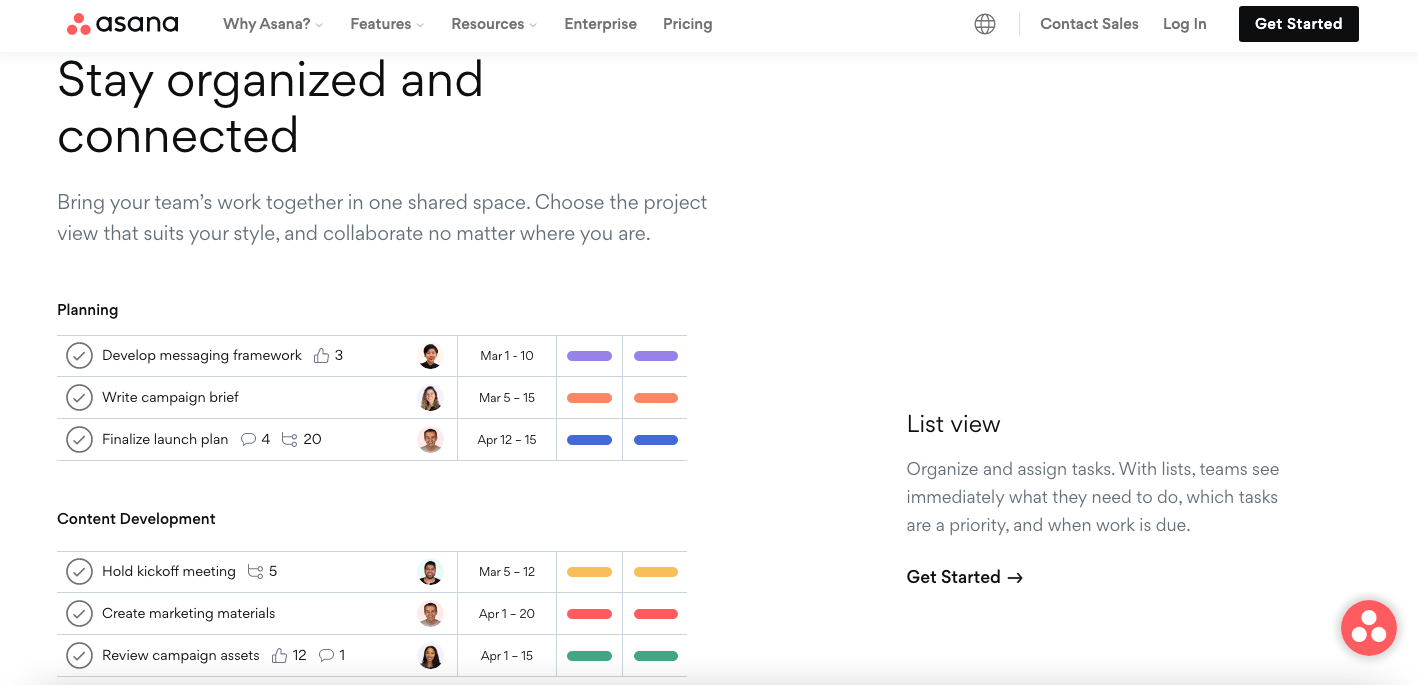
The first is task or project management software. This type of software, like Asana, allows you to see what tasks or projects are being worked on and how much progress has been made.
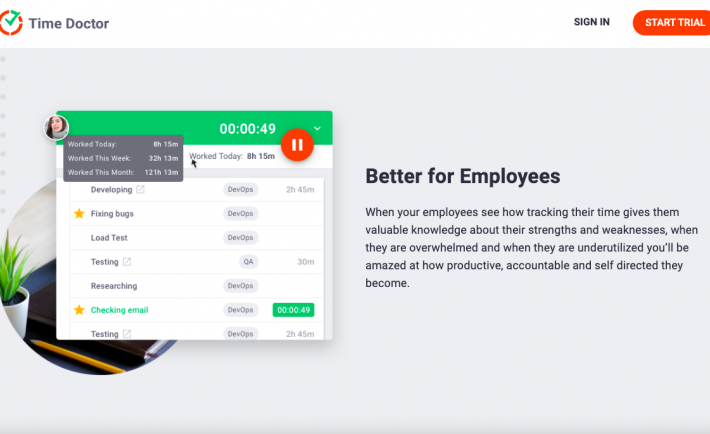
Another way to monitor productivity is with time-tracking, such as Time Doctor, or file-tracking software. They allow you to see how much time is being spent on each task or project and what files are being accessed.
Recognizing when to take a step back
You might be thinking to yourself, “If I’m not monitoring my employee’s every move, how will I know if they’re being productive?” And that’s a valid concern.
But there are ways to track productivity that don’t involve being overly intrusive. If you do need to check in on them from time to time, try to do it in a way that doesn’t make them feel like you don’t trust them.
Or to calm the micromanager traits in you, you could ask them to keep a log of their daily tasks and send you a brief rundown in bullet points of what they have accomplished each day before knocking off.
Trust is vital in any relationship, and that includes the relationship between boss and employee. By taking these steps, you can keep track of productivity without eroding employee trust. We know it’s a tricky balance, but bosses can keep an eye on their employees’ productivity without making them feel like they’re being constantly monitored. By taking a more subtle approach, bosses can foster a sense of trust and collaboration, while still being able to keep track of what’s going on.
The only way to eat an elephant is one bite at a time.
But when it comes to success, it’s easy to forget that saying and get overwhelmed by the size of the goal. Suddenly, the elephant doesn’t seem so manageable after all. Before we know it, we’re making excuses to put off progress.
Well, no more. In this article, we’re going to give you some tips on how to cut through the excuses and start moving ahead in 2023. Let’s get started!
Spotting excuses: What are you telling yourself?
The first step is recognizing when you’re making excuses.
Excuses are just stories we tell ourselves to justify not doing something. So what’s going on? Why are you telling yourself that you can’t do something?
Sometimes, our excuses are fears in disguise. We’re scared to take action because we’re afraid of failing. We’re scared of the unknown. We don’t want to put in the hard work required to achieve our goals.
But once you become aware of your excuses, you can start to ask yourself whether they’re true. Are you too busy or tired? Or are you just making excuses so you can avoid taking action?
Reframing the problem: How can you adjust your mindset?
Changing your mindset is easier said than done.
It’s hard to break old habits and patterns of thinking, especially if you’ve been making excuses for years. But it’s not impossible.
One way to do this is by practicing cognitive reframing. This means becoming more aware of the thoughts that go through your head, and then adjusting them so that they’re more supportive.
For example, if you find yourself saying “I’m not good enough” or “I can’t do this”, try reframing those statements into something more positive, like “I’m trying my best” or “I can do this”.
Another way to adjust your mindset is to change your fixed mindset into a growth mindset. This means taking on a more flexible attitude, and realizing that you’re not born with all the answers—you have to learn and grow to achieve success. With a growth mindset, you’re more likely to take on new challenges and persist even when things get tough.
Find motivation: What’s driving you to succeed?
Image Credits: unsplash.com
Now that you’re ready to get moving, it’s time to find your motivation.
For some people, this is easy—they’re driven by a passion for the work they do, or they want to achieve a certain goal. But for others, it can be more difficult to find that motivating force.
If you’re having trouble getting started, try to identify what’s driving you to succeed. What are your reasons for wanting to achieve this goal? Is it the recognition? The money? The feeling of satisfaction you will get when you finish?
Once you know what motivates you, it’s easier to get past the excuses and stay focused on your goal. You can use this information to create a plan and set smaller goals that will help you reach your ultimate destination. And if you ever feel like giving up, remind yourself of what’s waiting for you on the other side.
Break down goals: What small steps can you take to tackle the problem?
If you want to move forward and be successful, you need to learn how to cut the excuses and get down to business.
One way to do this is to break down your goal into small, manageable steps. When you have a huge task ahead of you, it can be overwhelming, and easy to make excuses. But if you break it down into smaller steps, you can focus on one thing at a time and make progress without getting bogged down.
For instance, let’s say you want to start your own business. That’s a big goal that can seem insurmountable. But if you break it down into smaller steps, it becomes much more manageable. You can start by doing some research, then creating a business plan, and then start scaling. By taking small steps, you will be able to achieve your big goal without getting overpowered.
Keep track of success: Celebrate small wins and use them as fuel
You may not always feel like you’re making progress, but trust us, you are.
And it’s important to keep track of your successes—no matter how small they may seem—so that you can use them as fuel to keep going.
One way to do this is to express gratitude for your wins, however small. When you take the time to celebrate your accomplishments, it stimulates your brain’s reward center and gives you a sense of satisfaction that can help motivate you to keep going.
So take a few minutes each day to write down what you’re grateful for. It could be something as simple as finishing a task or making 1% progress. Whatever it is, acknowledging your successes—however small they may be—is a crucial step in moving ahead.
Talk it out: Connect with an accountability partner
Image Credits: stylist.co.uk
If you’re serious about making progress, find someone who can help you stay on track. Here’s why an accountability partner is so important:
They keep you accountable.
It’s easy to make excuses when we’re the only ones holding ourselves accountable. But when someone else is watching over us, we’re more likely to follow through.
They offer a different perspective.
When we’re stuck in our heads, it’s hard to see things clearly. But when we talk to someone else, they can offer a different perspective that we might not have considered.
They help you see your blind spots.
We all have them—the things we can’t see about ourselves because we’re too close to the situation. An accountability partner can help you identify these blind spots so you can work on them.
Every day we are confronted with tasks that require effort. Whether it’s getting out of bed early to start your day, going to the gym, or sitting down to work on a project, there will always be moments when it’s easier to make excuses. And that’s okay. What’s crucial is that you don’t let the excuses win. Aim to move forward at least 1% each day. You got this!