Exploring the mind of a buyer: Keys to unlocking buying decisions

Singaporeans queuing outdoors

When you’re selling a product or service, understand the psychology of buyers.

After all, with an awareness of what motivates buyers, it’s easier to convince them to buy from you.

In this article, we will explore the basics of buyer psychology. We will discuss the different factors that influence buyers and offer tips on how to appeal to their motivations. Read on!

What is buyer psychology?

Have you ever wondered why people buy the things they do?

Or, more specifically, what goes through a person’s head when they make a purchase?

If so, you’re on the right track. That’s because buyer psychology is the study of human behavior when it comes to buying decisions.

In other words, it’s the study of why people feel the way they do about brands and products, and how those feelings translate into purchasing behaviors.

It’s a fairly complex area of study, but it’s something that any seller should be familiar with. After all, if you want to be successful in sales, you need to understand your buyers on a deep level.

So what does buyer psychology involve? Well, it involves understanding why shoppers behave the way they do. This can include anything from understanding how emotions play into buying decisions to understanding how social influences affect choice.

Additionally, it involves understanding the buyer’s journey—the process that leads a shopper from first considering a product to finally making a purchase. Keep scrolling if you’re interested in learning more about buyer psychology (and who isn’t?).

Understanding the stages of buying

a woman holding onto a credit card

Image Credits: unsplash.com

The buying process is not a simple one. It’s a journey that buyers go on, and it consists of three main stages: problem recognition, information gathering, and evaluating solutions.

During the first stage, buyers become aware of a problem or need that they have. In the second stage, they start to gather information about possible solutions. And in the third stage, they evaluate those solutions and decide which one to buy.

Keep in mind that buyers are often influenced by their emotions and need when making a purchase decision. So it’s wise to understand how those factors play into their buying behavior.

Harnessing social influence to drive purchases

When you understand the social psychology of shopping, you can create more effective promotions. For example, if you want to drive sales of a new product, you can use pressure to your advantage.

Create a sense of urgency by telling your customers that the product is in limited supply. Or, tap into the power of authority by mentioning that an expert or authority figure recommends the product. You can even get your customers to act out specific behaviors, such as liking or sharing your post.

Analyzing how your online presence impacts buying decisions

a toy cart with miniature shopping bags and boxes

Image Credits: africa.businessinsider.com

People want to make sure they’re buying quality products, so you need to be clear about what you’re selling, why it’s worth the cost, and what makes it unique.

Your website or landing page should show the quality of your products with clear images and descriptions, while also making the buying process as easy as possible. Beyond this, delivering a great experience—from start to finish—plays a massive role in whether a customer becomes a repeat customer.

Think about creating high-value content that stands out from your competition, offering incentives for new customers, responding quickly to inquiries, and always being transparent about pricing or any guarantees. All these actions can go beyond simply providing a product—they can help create an unforgettable impression for potential buyers.

Leveraging buyer loyalty for repeat purchases

Regarding buyer psychology, one concept you should be aware of is reciprocity.

Put simply, this means that if you do something nice for a customer, they are more likely to do something nice (in this case, making a purchase) in return.

To leverage the power of reciprocity and encourage repeat purchases, you can use psychological triggers like repeat discounts, free shipping, or loyalty gift cards to create an emotional connection.

Existing customers will often respond positively because they feel special when offered something at a discounted rate. Additionally, post-purchase services and interactions are key in ensuring buyers feel valued and appreciated after making their purchase.

By offering delivery updates that personalize the experience, responding to feedback with thoughtful consideration, and providing prompt customer support when requested, you can help increase the likelihood that your customers will become loyal and devoted fans of your brand.

Exploring the mind of a buyer is key to unlocking their buying decisions. By understanding their unique needs, preferences, and motivations, you can create a personalized experience that will resonate with them. Furthermore, building long-term relationships with buyers is meaningful and will lead to more sales in the future. Keeping educating and providing value that meets their needs. With these strategies in mind, you can unlock your buyers’ buying decisions and increase your sales in no time.


Read More...

How to share the death of a loved one with a child

a mum talking to her young daughter

It’s never easy telling a child that a loved one has passed away.

But it’s a necessary conversation to have, and with some preparation and thought, you can make it a little easier.

Understanding a child’s perception of death

For very young children, death may only be understood as a temporary absence.

This can be confusing and frightening for children, but it’s good to be as honest and straightforward as possible.

Remain calm and let your child see how you’re feeling. They will be looking to you for clues about how to react and will take their cues from your emotional state.

In addition, infants and toddlers are perceptive and can sense their caregiver’s emotions even if they can’t understand the words being spoken. Be sure to provide plenty of physical comfort in the form of hugs and kisses, and try to maintain a sense of normalcy as much as possible.

Preparing and planning for the conversation

When someone dies, it’s natural for children to feel a range of emotions, including confusion and sadness.

It’s your job as a parent to help them through this difficult time by providing answers to their questions and helping them understand what has happened.

The best way to do this is to prepare yourself and plan for the conversation. Make sure you have all the facts straight so that you can provide information to your child.

And be prepared for their questions—you may not have all the answers, but do your best to answer them. Let them know that it’s okay to feel sad or scared—and that you’re there for them, no matter what.

Talking about death in plain and honest terms
mother talking to her son

Image Credits: healthline.com

Death is a difficult topic for any adult, let alone a child.

But it’s best to avoid euphemisms and use simple words to explain what has happened.

Children must understand that death is a natural part of life and that they’re not responsible for it. Be prepared for questions, and answer them factually. If you don’t know the answer, say so.

Encouraging a child to express feelings

Allow your children to express their feelings, whether they are sad, scared, or confused.

It can be helpful to model appropriate behavior by talking about your feelings. This will let them know it’s okay to talk about emotions.

Allow them to talk about the person who passed away and answer any questions they have as honestly as possible. But be aware of age-appropriate language and information. For example, if your child is very young, use words like “left this world” rather than “died.”

It can also be helpful to encourage them to write a letter or draw a picture of the person who passed away or keep something that belonged to them, like a favorite item or piece of clothing. This can be an effective way to provide some comfort during this trying time.

Maintaining routines and schedules

Maintaining a sense of normalcy and sticking to routines can be helpful for both you and your child.

While grief can cause disruption, making sure that bedtimes, meal times, and school activities remain consistent can help create a sense of security.

When introducing new activities or changes to the schedule, do so thoughtfully. As much as possible, explanations should include details about why the change is taking place and what to expect. This will help reduce any potential anxieties that may arise with unfamiliar events.

You may also want to create clearly defined parameters; providing structure in this way will help your child understand what is expected of them and foster feelings of safety and security. During difficult times like these, having these types of routines can provide some comfort for both you and your child as you navigate through a difficult loss together.

If you’re not good with words, it can be helpful to find books or stories about death that you can share with your child, as it can provide some comfort and explanation. Above all, be sure to provide plenty of support and reassurance to your child, and let them know that it’s okay to be teary. Let them know that it’s okay to talk about the death of a loved one and that you will be there to listen whenever they want to share.

Read More...

Winning people over: A guide to creating a great first impression on-screen & in person

meeting for the first time

You only get one chance to make a first impression, and whether you’re meeting someone new online or in person, the stakes are high.

You want to make sure you put your best foot forward and come across as likable and credible.

In this guide, we will share some tips on how to make a great first impression both on-screen and in person.

By following these tips, you will be well on your way to creating a great first impression that will help you make connections that will (hopefully) last a lifetime.

How to make a great impression on-screen

When meeting someone online, the first thing they will see is your profile picture. So choose wisely.

If you’re on a video call, make eye contact. Look straight into the camera and hold the gaze. This will make you seem engaged and interested in the conversation.

Another way to make a great impression is to smile. A genuine smile will put your conversation partners at ease and show that you’re friendly and approachable.

Finally, be sure to dress for the occasion even if it’s just a video call. This will help you come across as serious and demonstrates that you respect the people you’re meeting across the screen.

Presenting your personality

Are you confident and poised, or are you fidgety and unsure? Be prepared to present yourself in the best possible light.

But don’t try to be someone you’re not. Be authentic and let your true self shine through, and people will be more likely to trust you.

Crafting your first impression in person
shaking hands

Image Credits: solvvy.com

  • Arrive early

Showing up early will give you the time to settle in and avoid feeling rushed or stressed. Plus, it sends the message that you value the other person’s time.

  • Modulate your pitch & tone of voice

Another key element of first impressions is your voice. Make sure you’re speaking in a clear, pleasant tone, and modulate your pitch as needed. Avoid speaking too quickly or too softly, as both can be difficult to listen to and frustrating to deal with.

  • Making eye contact & nonverbal communication

Making eye contact is essential when it comes to creating a great first impression.

It allows you to establish a connection with the other person quickly. A lack of eye contact might make the other person feel like you’re not invested in the conversation or don’t care about what they have to say.

Nonverbal communication plays an important role in making a first impression as well.

Make sure to focus on your posture, facial expressions, and body language when talking to someone new.

For example, make sure you maintain an upright posture with your shoulders back and head up while smiling and making natural gestures during conversations.

Be mindful of how you’re standing or sitting, and try to maintain a positive, open posture. Avoid crossing your arms or legs, which can make you look defensive or unapproachable.

These small changes have a big impact on how you come across to others and can instantly make people warm up to you. If you project an aura of presence and confidence, others will take notice and be more likely to remember you after the convo.

Developing long-lasting relationships

Making a good first impression is essential to establishing relationships.

But the key to developing long-lasting relationships is to actively demonstrate that you care about the other person.

The little things matter—a smile, a kind word, a gesture of appreciation—all these demonstrate that you value your connection with the other person. Pay attention to their needs, offer help when necessary, and make sure to follow up on any promises you have made.

Additionally, consider spending time with someone in an activity that both of you enjoy. Doing so allows for organic conversation and fosters a deeper understanding of each other’s interests and personalities. Above all, be genuine and honest in all your interactions; people don’t take kindly to those who try too hard or hide behind a mask of pretenses.

To make a great first impression, remember that it’s not all about you. Pay attention to the other person, and be sure to put your best foot forward. Whether you’re meeting someone for the first time online or in person, following these tips will help you make a remarkable impression and build strong relationships you will appreciate for life.

Read More...

Become a pro in conversations: Strategies on how to talk to anyone without nerves

a group of people talking

When you spot an interesting person from across the room, does your heart race, your palms start to sweat, and suddenly you feel tongue-tied?

Many people feel anxious when it comes to conversations, especially when talking to strangers. But worry not because in this article, we will share some strategies on how to talk to anyone without nerves. So the next time you see an intriguing person, you can approach them with confidence.

Why feeling nervous around strangers is natural

When we’re around strangers, our brains go into overdrive as it tries to figure out what is happening.

This response is known as the fight or flight response, and it’s responsible for the physical reactions we experience when we feel anxious or stressed.

This response is natural and happens to everyone. The difference between those who feel uncomfortable around strangers and those who don’t is that people with social anxiety disorder feel awkward in social situations. This can make it difficult to have conversations with strangers, especially if you don’t know what to say.

Change your mindset and reframe your perspective

When you feel nervous, it’s tough to think straight and the last thing you want to do is talk yourself out of it.

However, think of it this way: anticipation is worse than reality. In other words, you’re going to worry about how the conversation is going to go, what you’re going to say, and how the other person is going to react. But in most cases, that’s not what happens.

Acknowledge that you’re stressed and practice integrative awareness. This means that you’re taking notice of your body and mind, and the way they interact with each other. When you’re stressed, your sympathetic nervous system (the fight or flight response) kicks in and can hijack your thoughts and emotions.

But by being aware of this, you can start to take back control. You can observe your thoughts without getting wrapped up in them, which will help you stay calm and clear-headed during conversations.

Listen and be genuinely interested
listening to a coworker

Image Credits: unsplash.com

When you’re talking to someone, be genuine.

If you’re not keen on what they have to say, it will show—and that’s not going to make for a very successful conversation.

Instead, try to focus on the other person and listen to what they’re saying. Smile and give them your full attention. That way, they will feel appreciated and respected—and be more likely to open up and share more with you.

But it’s not all one-sided. You also need to contribute to the conversation by sharing stories and personal experiences. That way, it doesn’t feel like you’re just interrogating the other person. It’s a back-and-forth exchange that will make both of you feel more relaxed.

Connect with body language

Do you ever notice that your body language plays an important role in how others perceive you? 

You can use body language to show that you are approachable and open to conversation. Here are a few tips:

  • Smile

A smile not only tells others that you’re friendly and inviting, but it also makes them feel more at ease. A warm, genuine smile shows that you’re receptive and encourages the other person to talk to you.

  • Adjust your posture

Slouching or having your arms crossed across your chest will make people think that you don’t want to be bothered. Instead, lean forward, keep your back straight, and keep yourself open with your arms at your sides to show people that you are open and willing to listen.

  • Pay attention to the other person’s body language

Being aware of people’s facial expressions and body postures can give you subtle cues about what they may be thinking or feeling. This can help guide the conversation while also showing them respect by understanding their point of view.

Practicing conversation with a friend
two female friends talking and laughing

Image Credits: unsplash.com

Starting with a friend is a great way to get comfortable with conversations and practice the tips we have mentioned so far.

Find a friend you trust and take turns sharing stories about your respective days. Ask questions about how they feel, and try to listen for the specific emotions they are sharing—are they excited or feeling down? This can give you an idea of how best to continue the conversation.

With friends, feel free to experiment and play around with diverse conversation starters, as they’re more likely to be understanding than strangers. And remember—when talking to anyone, always project positivity into your conversations!

So there you go, a few simple techniques to converse with anyone. If you don’t remember anything you’ve just read, here are some takeaway tips for you: first, be genuine. People can tell if you’re not being yourself, and it will make the conversation much harder. Second, be respectful. Just as you don’t want to be talked down to, be sure to avoid doing the same to others. Finally, be interested. People love to talk about themselves, so ask questions and be engaged in the conversation. With these tips, you should be able to have successful conversations with anyone, without feeling nervous.

Read More...

From electrical outlets to crawling spaces: How to babyproof your home

baby reaching out to a pot in the kitchen

You’re probably gearing up to babyproof your home in preparation for your little one’s arrival. 

And you should because it’s never too early to start! In this post, we will give you a comprehensive guide to babyproofing your home. So read on.

Babyproofing essentials: electrical outlets, furniture & play areas

You will want to start by babyproofing the areas of your home that are most dangerous: electrical outlets, furniture, and play areas.

Electrical outlets should be covered with outlet covers, corner guards should be installed on sharp corners, and baby gates are also essential for keeping your child safe in play areas.

How to childproof doors and windows

Securing doors is one of the most important things you can do to babyproof your home. Make sure you use high-chain latches and be sure to install them correctly.

Safety latches are also a must for refrigerators, ovens, and cupboard doors. Again, be sure to install them correctly and check regularly to make sure they’re still working well.

Safety tips for stairs
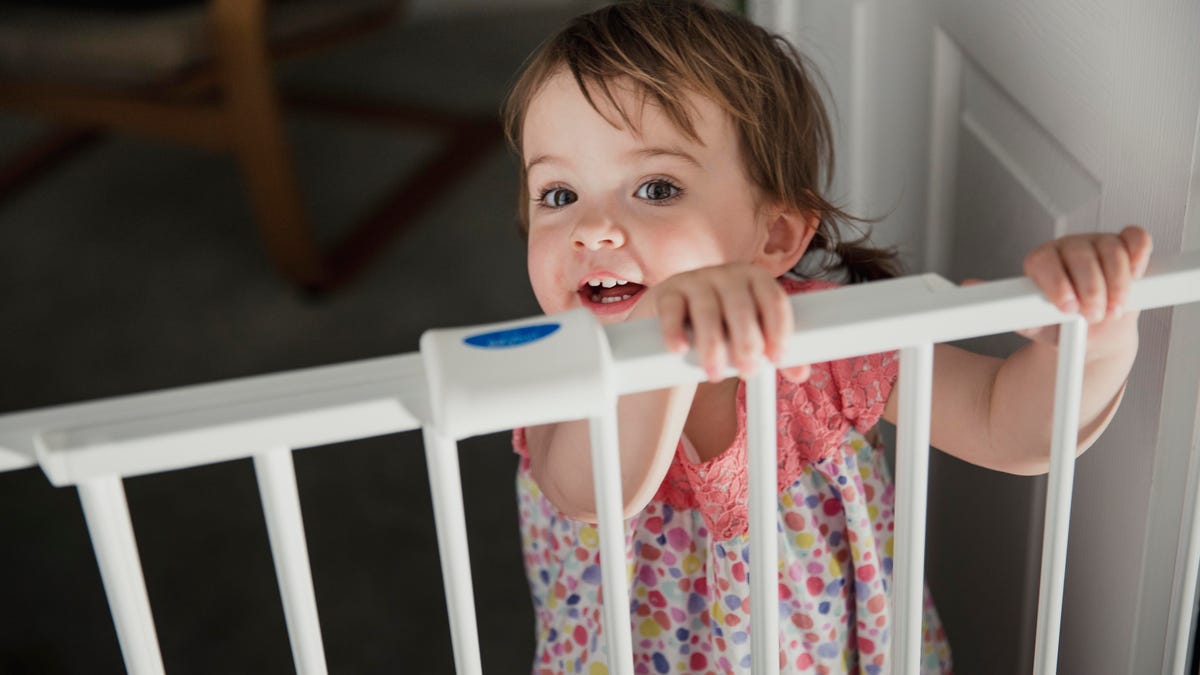
baby standing at a safety gate

Image Credits: forbes.com

If your house comes with stairs, install a baby gate at the top and bottom of the stairs to prevent your child from climbing up or down. Make sure the gate is sturdy and can’t be easily pushed open by a child.

If you have pets, keep them away from the stairs. Animals can be curious about babies and may try to investigate them, which could lead to a dangerous situation.

Childproofing cabinets and drawers

You will want to remove any dangerous objects from reachable cabinets and drawers and add childproof latches and locks to them. These will help to keep your little ones safe while they’re exploring.

Get ready for crawling: floor coverings, rugs & carpets

Another thing you need to think about when babyproofing your home is the flooring.

If you have hardwood floors, they can be dangerous for a crawling baby—you don’t want your little one to take a tumble and hurt themselves.

One solution is to use baby mats or rugs, which will not only protect your floors but also add a bit of cushioning in case of a fall. You can also buy non-slip mats and rug pads to put under the rugs, which will help them stay in place and prevent slipping.

As a recap, start by babyproofing your electrical outlets and cords. Move on to securing your furniture and other big items in your home. Last, but not least, make sure to babyproof your crawl spaces and other tight spots. It’s important to remember that babyproofing your home is an ongoing process. As your child grows and starts to explore, new dangers will emerge. Be sure to revisit your babyproofing checklist regularly and make any necessary changes. Babyproofing your home is an essential task and should not be taken lightly. By following the tips in this article, you can rest assured that your home is safe for your little one to tread around.

Read More...