9 newly opened cafes to visit at Hongdae, South Korea

new cafes in Hongdae

Have you heard?

Seoul Metro will be raising its fares in Q3 of 2023, which means it’s going to be slightly more expensive to travel via subway in Seoul starting in August or September.

But still, it’s going to be cheaper than cabbing around so… just saying.

And speaking of trains, it’s always easier to visit the shops near the stations, right?

I’ve received a really good response from my last post on newly opened cafes in South Korea last month so here’s another one for all you cafe-thirsty fans.

Oh, and yes, you can catch the post here if you’ve missed it:

3 newly opened cafes near Seongsu & Ttukseom Stations to visit in South Korea

Anyhow, for today’s post, we will be looking at cafes at a hot place—Hongdae. The nearest station will be Hongik University Station (홍대입구역), yeah.

Let’s roll with the names.

NU HAUS | 누하우스

Opening hours:

8.30 am to 9 pm (Monday to Wednesday)

8.30 am to 11 pm (Thursday & Friday)

12 pm to 11 pm (Saturday)

12 pm to 6 pm (Sunday)

Prices: Starting from 4,000/4,500 KRW (4.02/4.52 SGD) for drinks

Address: 19 Donggyo-ro 22-gil, Mapo-gu, Seoul, South Korea

Directions: 508 m from Exit 1 of Hongik University Station (green line 2)

MAXIM1CAFE | 맥심1층카페


View this post on Instagram


A post shared by 맥심1층카페☕️ (@maxim1cafe)

Opening hours:

8 am to 12 am (Monday, Wednesday, Thursday & Friday)

8 am to 8 pm (Tuesday)

11 am to 7 pm (Saturday)

Closed on Sundays.

Prices: Starting from 4,500 KRW (4.52 SGD) for drinks

Address: 22 World Cup buk-ro 5ga-gil, Mapo-gu, Seoul, South Korea

Directions: 492 m from Exit 1 of Hongik University Station (green line 2)

ㅇㄷㅇㅅ | 어더아사

Opening hours:

11 am to 10 pm (Monday to Thursday & Sunday)

11 am to 11 pm (Friday & Saturday)

Prices: Starting from 2,900 KRW (2.91 SGD)

Address: 40 Wausan-ro 23-gil, Mapo-gu, Seoul, South Korea

Directions: 194 m from Exit 9 of Hongik University Station (green line 2)

ZERO CAFE | 제로카페

Opening hours:

9 am to 10 pm (weekdays)

11 am to 9 pm (weekends & public holidays)

Closed on Tuesdays.

Prices: Starting from 4,300 KRW (4.32 SGD) for drinks

Address: 17 Wausan-ro 27-gil, Mapo-gu, Seoul, South Korea

Directions: 435 m from Exit 7 of Hongik University Station (Gyeongui–Jungang Line)

UNDERSTAND | 언더스탠드


View this post on Instagram


A post shared by 언더스탠드 (@understand__h)

Opening hours: 12 pm to 9 pm daily

Prices: Starting from 4,000 KRW (4.02 SGD) for drinks

Address: 11 Wausan-ro 29 da-gil, Mapo-gu, Seoul, South Korea

Directions: 315 m from Exit 7 of Hongik University Station (Gyeongui–Jungang Line)

MILKFLO | 미크플로 연트럴파크점


View this post on Instagram


A post shared by 미크플로 (@miikflo)

Opening hours: 10 am to 9 pm daily

Prices: Starting from 4,500 KRW (4.02 SGD) for drinks

Address: 46 Yanghwa-ro 23-gil, Mapo-gu, Seoul, South Korea

Directions: 267 m from Exit 3 of Hongik University Station (Airport Railroad Express)

DESSERT SAGAK | 디저트사각


View this post on Instagram


A post shared by Dessert S A G A K (@dessert_sagak_)

Opening hours:

11 am to 8.30 pm daily

Closed on Mondays.

Prices: Starting from 3,200 KRW (3.21 SGD) for desserts

Address: 28 Yeonhui-ro 1-gil, Mapo-gu, Seoul, South Korea (level 2, #202)

Directions: 289 m from Exit 3 of Hongik University Station (Airport Railroad Express)

CAFE LIFE | 라이프


View this post on Instagram


A post shared by from life to life (@cafe_coffee_l1fe)

Opening hours:

8.30 am to 7 pm (Monday to Friday)

11 am to 7 pm (Saturday)

Closed on Sundays.

Prices: Starting from 3,500 KRW (3.50 SGD) for drinks

Address: 26 Yeonhui-ro, Seodaemun-gu, Seoul, South Korea

Directions: 410 m from Exit 3 of Hongik University Station (Airport Railroad Express)

HOWEVER YEONNAM | 하우에버 연남

Opening hours: 11.30 am to 9 pm daily

Prices: Starting from 5,000 KRW (5.02 SGD) for drinks

Address: 45-6 Yeonhui-ro 1-gil, Mapo-gu, Seoul, South Korea

Directions: 397 m from Exit 3 of Hongik University Station (Airport Railroad Express)

As we wrap up this post of Hongdae’s latest cafe gems, it’s time to grab your friends, your favorite book, or just yourself and head out to explore these 9 new cafes. From creative and cozy hideouts to lively and social-media-worthy spots, each destination offers a unique atmosphere that will excite your senses and fuel your soul. So, whether you’re a cafe hopper, a coffee connoisseur, or simply looking for a place to rest your legs, these newly opened F&Bs in Hongdae are sure to become your go-to havens for your upcoming Korea trip. Have a lovely time to come!


Read More...

11 Reasons to Ask for a Salary Increase

When money is involved, asking for a salary increase becomes a sensitive topic, requiring proper planning. To successfully request a salary increase, you need to convince your supervisor that you deserve it and choose the right timing. This article highlights the best time to ask for a raise and provides guidance on making this request.

#1: YOUR POSITION EVOLVED

Your work performance is one of the strongest arguments for receiving a pay raise. Going beyond the requirements of your job may involve taking on additional responsibilities, surpassing quotas, and assisting your co-workers. If your position has evolved to include new tasks, you can discuss the possibility of a pay raise with your supervisor. If you are capable of completing these tasks, offer to take responsibility for them voluntarily. This demonstrates your enthusiasm to learn and your commitment to the company’s success.

#2: YOU RECEIVED A PROMOTION

A change in position often comes with an increase in salary, which is particularly significant when transitioning from a rank-and-file role to an executive or managerial position.

#3: YOU GAINED SENIORITY

Did you recently gain seniority in your company? In some companies, particularly in the public sector, as employees gain more seniority, their position grade and rewards tend to increase. This can be expressed through various forms of recognition, such as benefits or bonuses, which acknowledge their years of service and dedication.

#4: YOU WERE REQUIRED TO TRAVEL MORE

Traveling for work, as mandated by your job responsibilities, can serve as a compelling reason for an increase. It not only demands adapting to diverse environments, childcare arrangements, and professional schedules but also entails emotional challenges. Moreover, travel carries inherent risks that can potentially compromise the safety and well-being of workers.

#5: YOU NEED TO ALIGN WITH INFLATION

An employee’s salary is initially determined upon their employment, but it can be subject to change through annual promotions and other factors, such as inflation. It is crucial to argue for the need to align the cost of living with current wages. One significant aspect is ensuring that the salary keeps pace with the evolving minimum wage, which is reassessed annually, often in December, depending on the company. Regular salary adjustments are essential to maintain a fair and equitable compensation structure.

Image Credits: unsplash.com

#6: YOUR COMPANY IS GROWING

The company you work for is experiencing growth, and you play a crucial role in that progress. It is entirely acceptable to request a pay increase because of this expansion. However, it is essential to articulate how your contributions have contributed to the collective effort that drove this growth. What did you do differently from others?

#7: YOU BROUGHT IN NEW CLIENTS

In line with the company’s growth, if you have brought in a significant number of clients in recent years, you can make a persuasive case for a raise based on your exceptional networking skills and abilities. As a commendable employee, it is important to assert your value through concrete facts and sales figures.

#8: YOU MANAGE MORE PEOPLE

Have you recently been assigned to a team? It is deserving of a raise due to your new responsibilities. Managing individuals with their unique differences can pose a challenge for any employee. Effective management cannot be improvised; it demands specific qualities, efforts, and concessions.

#9: YOU ARE PAID LESS THAN YOUR CO-WORKERS

With comparable professional characteristics (such as time, position, experience, and diploma), the pay gap between men and women in Singapore was 14.4% in 2020. This indicates that full-time resident women aged 25 to 54 earned $0.856 for every $1.00 earned by their male counterparts.

If you discover that you are being paid less than a co-worker with the same qualifications and job duties, it is important to discuss this matter with the Human Resources department. Seek to understand the reasons behind this disparity and do not hesitate to engage in salary renegotiations.

#10: YOU RECEIVED AN EXCELLENT PERFORMANCE REVIEW

Since most employers factor in individual performance when making pay decisions, it becomes a crucial variable when being considered for a pay increase or promotion. Demonstrating excellent performance is essential for retaining your current responsibilities and achieving a higher salary. Consistently maintaining a high level of performance is equally important. Even when applying for a new job, this information can hold significance for your prospective employer as it provides a more comprehensive understanding of your abilities.

#11: YOU GAINED ADDITIONAL EDUCATION

In healthcare and academia, pursuing further education and obtaining certifications hold significant importance. The quality of one’s education can directly impact their salary. Graduating from a top program generally has a positive influence on pay. Furthermore, acquiring additional certifications relevant to your current position can contribute added value to the company, providing compelling arguments during salary negotiations.

Image Credits: unsplash.com

In conclusion, there are numerous valid reasons to request a salary increase, including evolved position, promotion, seniority, increased travel, inflation alignment, company growth, client acquisition, team management, pay disparity, excellent performance, and additional education. Best of luck in your negotiation!

Sources: 1,2, & 3

Read More...

6 neutral-colored flat shoes from $44+ you can wear for your wedding and beyond

Pearl Bow Faux Leather Espadrilles PS663-3

Heels are not a must for weddings.

Especially more so if you’re not used to wearing them daily. If I were you, I would spend my money on flat shoes so I can wear them for my wedding and beyond.

If you think the same, here are 6 neutral-colored flat shoes from $44+ for your consideration.

Prices reflected are accurate at the time of writing.

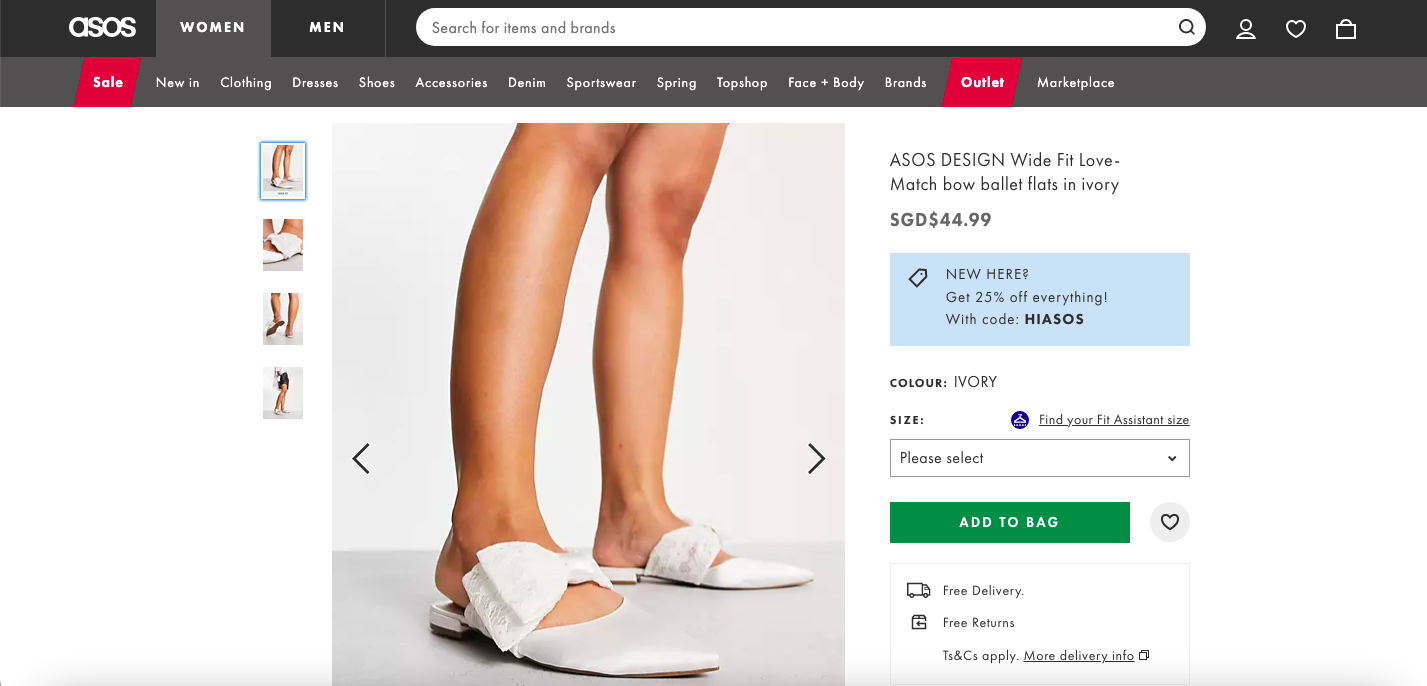
Wide Fit Love-Match Bow Ballet Flats – Ivory

ASOS DESIGN Wide Fit Love-Match bow ballet flats in ivory

Price: $44.99

Step up your fashion game with these stylish Wide Fit Love-Match Bow Ballet Flats from ASOS. With a glossy, satin-style upper and sophisticated ivory hue, plus a sweet lace bow detail, these slip-on flats combine classic chic with modern comfort. And they fit like a dream thanks to the comfy wide fit. Whether you’re walking down the aisle or strutting down the street, you never have to sacrifice style for comfort again!

Metallic Accent Mary Janes – Nude

Metallic Accent Mary Janes - Nude

Price: $56.90 or 3 payments of S$18.97 with ShopBack PayLater

A perfect blend of chic and classic, these Mary Janes are an essential upgrade to your fashion lineup beyond your wedding. Showcased in a versatile nude hue, the contrasting black foundation and eye-catching gold-tone detail create a visually gorgeous design. Featuring a subtle heel (still flat enough though) and cushioned insole for all-day comfort and walkability, these shoes are ideal for workdays, weekend brunches, and every event after your big day.

Bead-Embellished Mesh Flat Sandals – Nude

Bead-Embellished Mesh Flat Sandals - Nude

Price: $56.90 or 3 payments of S$18.97 with ShopBack PayLater

Elevate your daily ensembles with these nude-pink flat sandals, providing a touch of refinement to your looks. Boasting wide straps made from premium mesh and adorned with elaborate bead accents, these sandals ensure both style and comfort. The footbeds offer a luxurious experience with plush faux suede at the front and breathable faux leather at the back.

Pearl Bow Faux Leather Espadrilles – Beige

Pearl Bow Faux Leather Espadrilles

Price: $83 (was $96)

Step out into sunshine-filled days in these beautiful Pearl Bow faux leather espadrilles from Twenty Eight Shoes. Carefully crafted for breathability, this footwear provides a soft faux leather upper and a round-toe cap for added comfort. The inner sole is made from moisture-absorbent microfiber leather, while a wear-resistant and anti-skid rubber sole brings lasting durability. Finished with a creative pearl bow and hand-stitched hem, you will love showing off these beautiful espadrilles for your special day and all summer long in sunny Singapore.

Rina Mesh Ballerina Flats – Nude

Rina Mesh Ballerina Flats - Nude

Price: $85.90 or 3 payments of S$28.63 with Atome or ShopBack PayLater

Upgrade your everyday look after your big day with this fashionable and adaptable Rina Mesh Ballet Flats in nude. The mesh upper offers a versatile, easy-to-wear design while the playful bow detail adds a touch of whimsy to the silhouette, making these flats an immediate essential in your shoe closet.

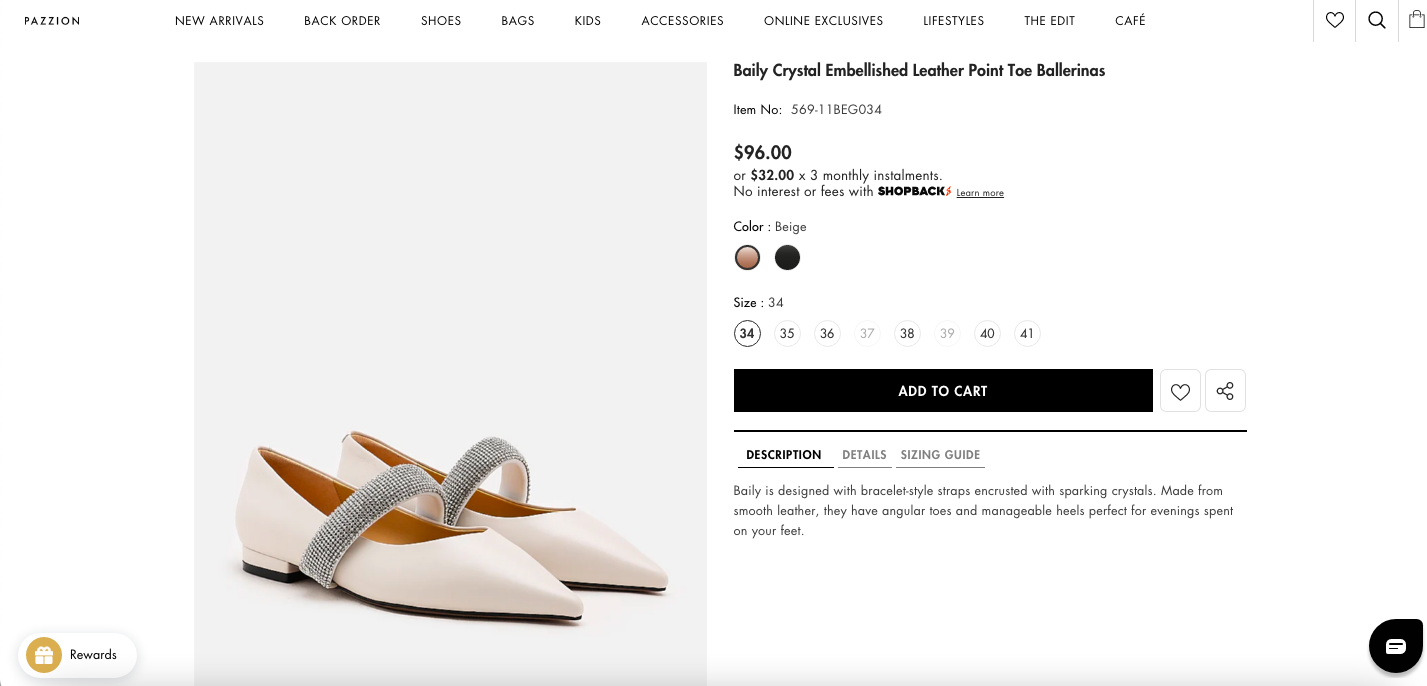
Baily Crystal Embellished Leather Point Toe Ballerinas – Beige

Baily Crystal Embellished Leather Point Toe Ballerinas webpage


Price: $96.00 or $32.00 x 3 monthly installments with ShopBack PayLater

The last on our list are these ballet flats that boast elegant, bracelet-like straps adorned with shimmering crystals. Crafted from supple lambskin and smooth leather, they feature distinct angular toes and not-high-at-all heels, making them perfect for wedding evenings spent standing and socializing.

These neutral-colored flat shoes under $100 offer an excellent blend of style, comfort, and affordability for your special day and beyond. Each of these versatile options can effortlessly transition from your wedding celebration to everyday wear, making them a valuable investment for your wardrobe. With these elegant and timeless designs, you will be sure to make a statement on your wedding day and continue to exude grace and poise in all of life’s future events. So go ahead, indulge in a pair (or two), and dance the night away, knowing you’ve made a stylish and practical purchase.

Read More...

7 children’s books that teach young kids about money

money themed books

Looking for books to introduce to your kids the concept of money or personal finance?

Allow me to present you 7 children’s books you can consider for your next book haul and read-aloud session.

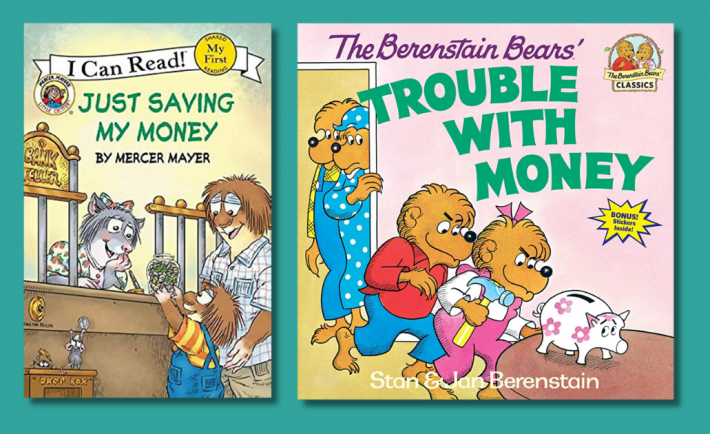
“The Berenstain Bears’ Trouble with Money” by Stan and Jan Berenstain

If your kids spend a dollar when they have a dollar, this book would be apt for them. It also teaches kids about the meaning behind an “allowance” and how they should save money in the bank so it collects interest. Suitable for kids aged 3 to 7.

“Alexander, Who Used to Be Rich Last Sunday” by Judith Viorst

I absolutely love this book! There’s something repetitive about it that makes it very literatur-ish. Ha, but laughter aside, it teaches kids about decisions. Every decision that one makes could result in a loss of money, which Alexander made and lost his cents, which quickly added to a dollar. Suitable for kids aged 6 to 8.

“Lemonade in Winter: A Book About Two Kids Counting Money” by Emily Jenkins

The money used may not be applicable in the Singapore context but I like how it still teaches math and simple calculations. You can also take the time to explain to your child how running a business doesn’t guarantee profit right from the start. Suitable for kids aged 3 to 7.

“A Chair for My Mother” by Vera B. Williams

This is a very heartwarming story in my opinion. I think it teaches kids that saving every little penny counts. It adds up! And if you’re into name and fame, then know that this book is a Caldecott Honor Book awarded by the American Library Association. Quality assured. Suitable for kids aged 3 and above.

“One Cent, Two Cents, Old Cent, New Cent: All About Money” by Bonnie Worth (A Dr. Seuss-inspired book)

Read widely and you will know that it’s hard to get stories written in the Singapore context. There are, but not plentiful. But still, I think this book gives a good look into the history of money in other nations, which can be an eye-opener for our juniors. Suitable for kids aged 5 to 7.

“Bunny Money” by Rosemary Wells

A really adorable illustrated book with the bunny theme at the center of it all. This story serves as an underlying reminder that making a trip out requires money: bus fares, lunch, and unexpected mishaps. Suitable for kids from 3 to 5, this picture book introduces our young ones to early math concepts.

“Little Critter: Just Saving My Money” by Mercer Mayer

This is a fantastic storybook that will explain to your child what a “savings account” is. Using words that are easy to understand, young kids from the age of 3 will get introduced to the concept of money and how they have to “work” for it. Animal lovers will adore this simple read!

These children’s books offer a valuable and engaging starting point for teaching young kids about money. Through relatable characters and captivating plots, children will learn vital lessons about saving, spending and making wise financial choices. By introducing these concepts at an early age, we can help set the foundation for a lifetime of financial responsibility and empower our children to make informed decisions as they grow. So grab one of these books, snuggle up with your little ones, and embark on an exciting journey to financial literacy together. Happy reading!

Read More...

Psychology of Money: How Our Emotions Affect Our Finances

Money, an essential aspect of our lives, goes beyond its tangible form. It holds a deep connection with our emotions, influencing our financial decisions and shaping our financial well-being. In fact, a study performed by Nobel Prize-winning psychologist Daniel Kahneman found that we make financial decisions based 90% on emotion and only 10% on logic.

Financial therapist and wealth counselor Marilyn Wechter further illustrates this through philanthropy. “Philanthropy isn’t just a strategy to reduce your tax liability, but a wonderful thing to do that’s usually motivated by emotion,” she said. The act of giving exudes happiness in the benefactor, even if it requires some sacrifice on their part.

Much like this example, understanding the psychology of money is crucial for gaining control over our finances and achieving long-term financial success. Let’s delve into the intricate relationship between emotions and money and explore how our psychological tendencies can impact our financial lives!

#1: EMOTIONAL SPENDING

Do you practice retail therapy?

Emotional spending, often referred to as “retail therapy,” is a prevalent coping mechanism employed to alleviate feelings of sadness, stress, or other negative emotions. The act of purchasing items may provide temporary relief and a fleeting sense of well-being. However, relying on material possessions to fill emotional voids can initiate a destructive cycle of overspending and financial instability. The consequences become evident when the dreaded credit card bills arrive.

To break free from this detrimental pattern, it is crucial to develop healthier coping strategies. Engaging in physical activity, practicing mindfulness, or seeking emotional support are effective ways to cultivate a more balanced and constructive relationship with money.

#2: INSTANT GRATIFICATION

One of the common emotional traps we often fall into is the allure of impulse spending to satisfy our immediate urges and desires. The exhilarating feeling of acquiring something new can provide a temporary high, but it frequently results in remorse after the purchase. To effectively manage this behavior, it is essential to grasp the psychological factors influencing our spending habits, including the need for validation. By gaining this understanding, you can take proactive measures to restrain your impulse spending.

A helpful strategy is to be intentional with your purchases and practice a waiting period of at least 24 hours before committing to significant expenses. This delay allows you to reassess the necessity and importance of the purchase, reducing the likelihood of impulsive decisions. During this time, reflect on whether the item truly aligns with your long-term financial goals and values.

#3: SOCIAL COMPARISON

Are you following social media accounts that frequently highlight their travel destinations and luxurious possessions? Humans are prone to comparison, and the age of social media has only amplified this tendency.

Witnessing others flaunting their extravagant lifestyles can evoke feelings of inadequacy, ultimately leading to excessive spending and financial strain. However, it is crucial to remember that each person’s financial journey is unique, and genuine financial success arises from aligning our actions with our individual financial goals.

Image Credits: unsplash.com

Engaging in self-examination is an effective way to prevent jealousy from influencing our financial decisions. It involves being completely honest and removing the influence of others’ opinions from the equation. By doing so, we can transform jealousy into motivation. Instead of fixating on what others have, shift your focus towards your own progress and cultivate a sense of gratitude for what you have achieved.

#4: GUILTY FEELINGS

People who are more prone to guilt are also more inclined towards altruism. In the best-case scenario, this altruistic inclination motivates us to share our abundance with others through charitable contributions. However, in the worst-case scenario, it can lead us to spend money that we actually need for ourselves on others.

To prevent such situations and maintain a healthy balance, it is essential to establish limits. One effective way to avoid going overboard is by setting budgets for specific expenses, such as when giving Christmas or birthday gifts. By implementing a budget, we can ensure that our generosity aligns with our financial capabilities and responsibilities. Remember, being mindful of our own needs and financial limitations does not diminish the value of our altruistic intentions.

#5: MONEY AVOIDANCE

Emotions such as anxiety, shame, or fear can significantly contribute to financial procrastination and avoidance of money-related responsibilities. Failing to address these emotions and neglecting financial issues can have severe consequences for our long-term financial well-being.

We have the ability to overcome these obstacles and regain control over our finances. It starts with acknowledging and addressing the underlying emotions that hinder our progress. Seeking professional help and guidance is a valuable step in this process. In Singapore, there are various reputable financial advisers available, such as Singapore Financial Planners, Expat Advisory Group, Providend, and Synergy Financial Advisers. It is important to find an institution that aligns with your specific needs.

Image Credits: unsplash.com

In conclusion, our emotions and financial lives are deeply intertwined. By understanding the psychology of money and acknowledging the impact of our emotions, we can empower ourselves to make prudent financial decisions. Let’s embark on this journey of self-awareness, resilience, and financial empowerment, one step at a time.

Sources:1,2, & 3

Read More...