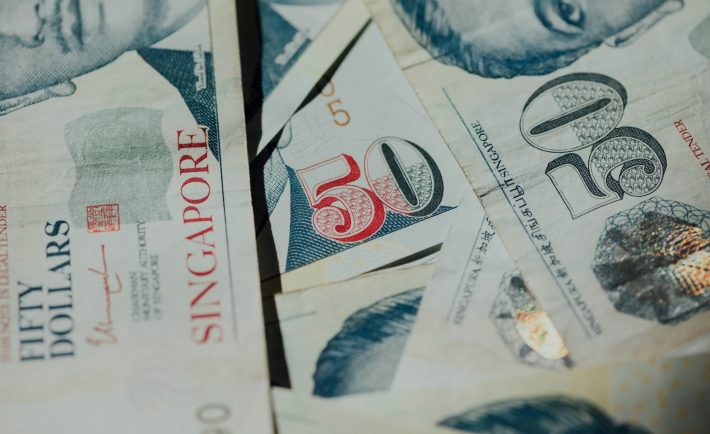
How Singaporeans Really Spend Their Money

How much do Singaporeans actually know about their monthly spending, and where does all that money go?

A 2021 survey of 1,299 adults revealed a surprising insight: less than half (or 48%) said they knew how much they spent each month. The slight majority of 52% admitted they had little idea. Among the youngest group, aged 18 to 24, only 43.6% tracked their monthly expenses. By comparison, adults aged 25 to 34 were the most aware at 52%, likely because that stage of life comes with big-ticket commitments such as weddings, first homes, and raising children. Older respondents, aged 55 and above, also showed relatively high awareness at 49.8%, possibly because retirement planning was on the horizon.

By 2025, the numbers painted a clearer picture of actual spending. Young adults spent about S$1,486 a month on average. Full-time employees typically spent between S$501 and S$1,000, while part-time workers spent less than S$500. Interestingly, food consistently ranked as the largest expense for full-time workers, a reflection of Singapore’s strong dining-out culture at hawker centres, cafes, and restaurants.

Image Credits: unsplash.com

The bigger question is whether income growth has kept pace with rising expenses. In 2019, Singapore’s median monthly household income from work including employer CPF contributions, was S$9,425. On a per-person basis, that translated to S$2,925. In 2000, the median household income was just S$4,398. The near-doubling over two decades highlights Singapore’s steady income growth, an important indicator of its economic resilience. Yet with inflation and lifestyle expectations rising, the real challenge lies in how households allocate that income.

The 2017/2018 Household Expenditure Survey offered a detailed snapshot. The average household spent S$4,906 per month. Out of this, S$1,199 went to food, with S$810 spent outside the home. Clothing and footwear accounted for S$123, recreation and culture for S$379, and educational services such as tuition for S$339. Housing remained one of the most significant lifestyle markers. By 2019, Singapore’s home ownership rate had reached an impressive 90.4%, making property both a financial anchor and a status symbol.

Ultimately, spending habits are shaped by three main factors:

a. Income level. Higher earners devote more to experiences and luxury goods, while lower-income households focus on essentials.

b. Lifestyle and preferences. Some prioritize saving and financial goals, while others lean toward experiences such as travel, dining, and entertainment.

c. Age. Different life stages bring different financial priorities, from weddings and childcare to retirement planning.

Image Credits: unsplash.com

The real question for Singaporeans is not only how much they spend, but also whether those spending patterns bring them closer to the lifestyle they aspire to. Personally, my husband and I spend most of our money on food, utilities, and travel. How about you?

Sources:1,2, & 3


Read More...

Unlock Free Lounge Access with Your Credit Card

For frequent jetsetters, nothing feels more indulgent than stepping away from the crowded terminal and into the calm of an airport lounge. More than a waiting area, it is a sanctuary where you can settle into a plush seat, sip a complimentary drink, enjoy a hot meal, and even catch up on work without the usual airport frenzy.

This experience is no longer reserved for business class tickets or elite frequent flyers. With the right credit card, you can unlock a global network of lounges that quietly elevate your travel routine.

Image Credits: unsplash.com

At the top of the scale sits the American Express Platinum Card, often regarded as the gold standard for those who value both breadth and luxury. Cardholders earn 0.69 miles per S$1.60 spent locally and enjoy unlimited worldwide lounge access. The exclusivity comes at a steep cost with an annual fee of S$1,744, but for those who fly often, the comfort and convenience often outweigh the price.

For travelers seeking balance between cost and perks, the Citi PremierMiles Card has long been a crowd favorite. It offers 1.2 miles per local dollar and 2.2 miles per overseas dollar, along with two complimentary Priority Pass lounge visits per year at more than 1,300 airports. The annual fee of S$196.20 makes it a practical choice for those who may not travel every month but still want comfort when they do.

The DBS Altitude Visa Signature Card delivers strong value, especially for those who maximize overseas spending. Cardholders earn 1.3 miles per local dollar and up to five miles per overseas dollar, paired with two complimentary Priority Pass lounge visits each year. With an annual fee of S$196.20, it is a solid option for travelers who want their everyday spending to translate into meaningful travel rewards.

At the entry level, the Standard Chartered Journey Credit Card with an annual fee paying version extends a taste of premium travel. It earns 1.2 miles per local dollar and two miles per overseas dollar, plus two Priority Pass lounge visits annually. The annual fee of S$196.20 makes it an approachable choice for younger professionals or occasional travelers who want to enjoy the benefits of lounge access without overcommitting.

Image Credits: unsplash.com

In the end, the value of free lounge access depends on how often you fly and how much you prize comfort before takeoff. For some, unlimited entry is worth every dollar of the fee. For others, a couple of complimentary visits each year provide the right balance. What is clear is that modern credit cards are reshaping the way we travel, making airport lounges less of an exclusive privilege and more of a practical perk.

Sources: 1 & 2

Read More...

iPhone 17, iPhone 17 Pro and the ultra-thin iPhone Air will be available for pre-order this Friday, 12 Sep 25

Apple has officially introduced its latest generation of iPhones: the iPhone 17, iPhone 17 Pro, and the all-new iPhone Air. Each device pushes the boundaries in its own way — from the brighter display and smarter cameras of iPhone 17, to the pro-grade performance of iPhone 17 Pro and Pro Max, and the impossibly thin yet powerful design of iPhone Air. Together, they mark Apple’s most ambitious iPhone launch to date, all running on iOS 26 and powered by Apple’s latest silicon.


iPhone 17 — Bigger, brighter, smarter (now with Centre Stage selfies)

What’s new:

  • 6.3-inch Super Retina XDR with ProMotion up to 120Hz, 3,000-nit peak outdoor brightness, thinner borders, Always-On, and improved power efficiency.

  • Ceramic Shield 2 with 3× better scratch resistance and reduced glare.

  • All-new Centre Stage front camera (18MP square sensor), Dual Capture, and AI-assisted group framing.

  • 48MP Fusion Main (with 2× Telephoto) + 48MP Fusion Ultra Wide.

  • 4K60 Dolby Vision video, Cinematic/Action modes, Spatial Audio, wind-noise reduction, and spatial capture for Apple Vision Pro.

  • A19 chip delivers faster CPU/GPU and Apple Intelligence on-device; Adaptive Power Mode pushes up to 30 hours video playback; 50% charge in ~20 minutes with 40W adapter.

Finishes & price (SG): lavender, mist blue, sage, white, black; 256GB/512GB; from S$1,299.
Pre-order: Sep 12 • Available: Sep 19.

Click here to pre-order.


iPhone 17 Pro & iPhone 17 Pro Max — New design, A19 Pro, and pro-grade video

What’s new:

  • Aerospace-grade aluminum unibody with forged plateau for a larger battery + Apple-designed vapor chamber for sustained high performance.

  • 6.3-inch / 6.9-inch Super Retina XDR, ProMotion 120Hz, Always-On, 3,000-nit outdoor peak, and Ceramic Shield 2 front & back for best durability yet.

  • A19 Pro with hardware-accelerated ray tracing, Neural Accelerators, and up to 40% better sustained performance.

  • Triple 48MP Fusion cameras (Main, Ultra Wide, new Telephoto) equivalent to 8 lenses, including 4× at 100mm and 8× at 200mm zoom.

  • Center Stage front camera (18MP), Dual Capture, and AI-based group framing.

  • Firsts for iPhone video: ProRes RAW, Apple Log 2, genlock for multi-cam shoots.

Finishes & price (SG): deep blue, cosmic orange, silver.

  • iPhone 17 Pro: from S$1,749 (256GB).

  • iPhone 17 Pro Max: from S$1,899 (256GB).

Pre-order: Sep 12 • Available: Sep 19.

Click here to pre-order.


iPhone Air — The thinnest iPhone ever, without compromise

What’s new:

  • Just 5.6 mm thin, Grade-5 titanium frame, high-gloss mirror finish, and precision-milled plateau housing cameras, silicon, and speaker.

  • First iPhone with Ceramic Shield 2 on the front and Ceramic Shield on the back, giving 3× better scratch resistance and 4× crack resistance vs prior back glass.

  • 6.5-inch Super Retina XDR with ProMotion 120Hz, Always-On, 3,000-nit outdoor peak.

  • Powered by A19 Pro, the new N1 wireless chip (Wi-Fi 7, Bluetooth 6, Thread), and C1X modem (up to 2× faster and 30% more efficient).

  • 48MP Fusion Main camera (28/35mm + 2×) and 18MP Centre Stage front camera.

  • eSIM-only design, slimmer internals, easier travel connectivity.

Finishes & price (SG): space black, cloud white, light gold, sky blue; 256GB/512GB/1TB; from S$1,599.
Pre-order: Sep 12 • Available: Sep 19.

Click here to pre-order.


COMPARISON & PRICING

Read More...

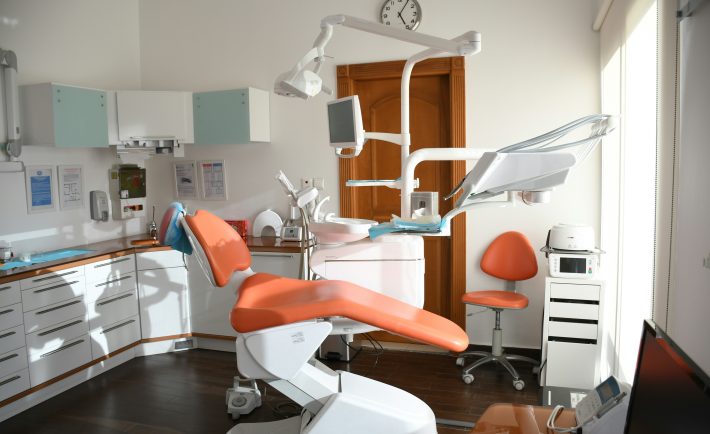
4 best-rated dental clinics in & around the CBD of Singapore to get your dental woes tackled quickly

dental clinic

If you’re a CBD worker, this article would be perfect for you.

Get your dental woes solved with an appointment at these best-rated dental clinics in and around the CBD of Singapore 🪥

Newlife Dental Practice

newlifedental.com.sg/services/

Website: newlifedental.com.sg

Google Rating: 5 (930+ reviews)

Address: 6 Eu Tong Sen St, #05-22 Clarke Quay Central, Singapore 059817

At Newlife Dental Practice in Clarke Quay Central, comprehensive dental care comes with a side of expertise.

Led by clinic director Dr. Aaron Hoo, a Dean’s List graduate from the National University of Singapore, this multi-disciplinary dental practice handles everything from routine cleanings to sudden toothaches.

Need a general dentistry appointment or dreaming of a nice smile through aesthetic dentistry?

Visit the team at Newlife Dental Practice.

Here’s their range of services: newlifedental.com.sg/services

Straits Dental Group Raffles Place

straitsdental.com/General-Dentistry-Dentist-Dental-Scaling-and-Polishing

Website: straitsdental.com

Google Rating: 5 (350+ reviews)

Address: 30 Raffles Pl, #02-12 CIMB Plaza, Singapore 048622

Straits Dental Group Raffles Place is sited just 120 m from Raffles Place MRT station, in CIMB Plaza that brings together two dental directors: founder Dr. Jeremy Cheah, a National University of Singapore graduate, and Dr. Samuel Loh, who earned his Doctor of Dental Surgery with honors from the University of Melbourne.

Beyond dentistry services, Straits Dental Group Raffles Place offers a list of facial aesthetic treatments from Botox and dermal fillers to skin boosters and high-intensity focused ultrasound (HIFU).

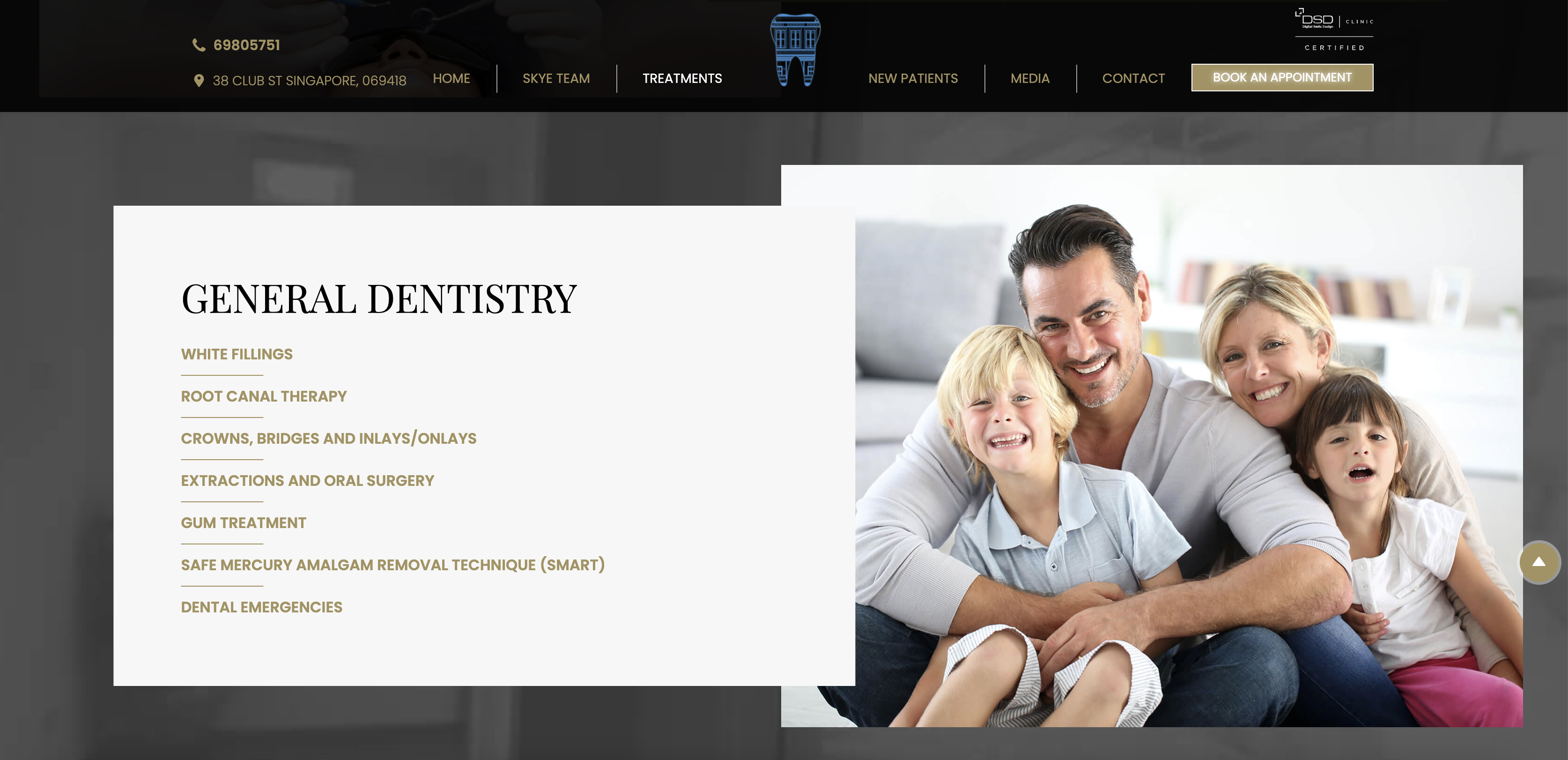
Skye Dental

skyedental.sg/dental-treatments-singapore

Website: skyedental.sg

Google Rating: 5 (260+ reviews)

Address: 38 Club St, Singapore 069418

Named after Scotland’s Isle of Skye, this practice is helmed by Dr. Andrew, a University of Glasgow graduate who recently achieved Digital Smile Design Mastership (in 2023).

Working alongside him is Dr. May Ling Eide, whose Honors degree from Glasgow and extensive orthodontic experience ensure your smile is in expert hands.

From general dentistry to orthodontic treatments and more, Skye Dental has a convenient location near Telok Ayer MRT station (300 m from the station).

See their list of treatments here: skyedental.sg/dental-treatments-singapore 

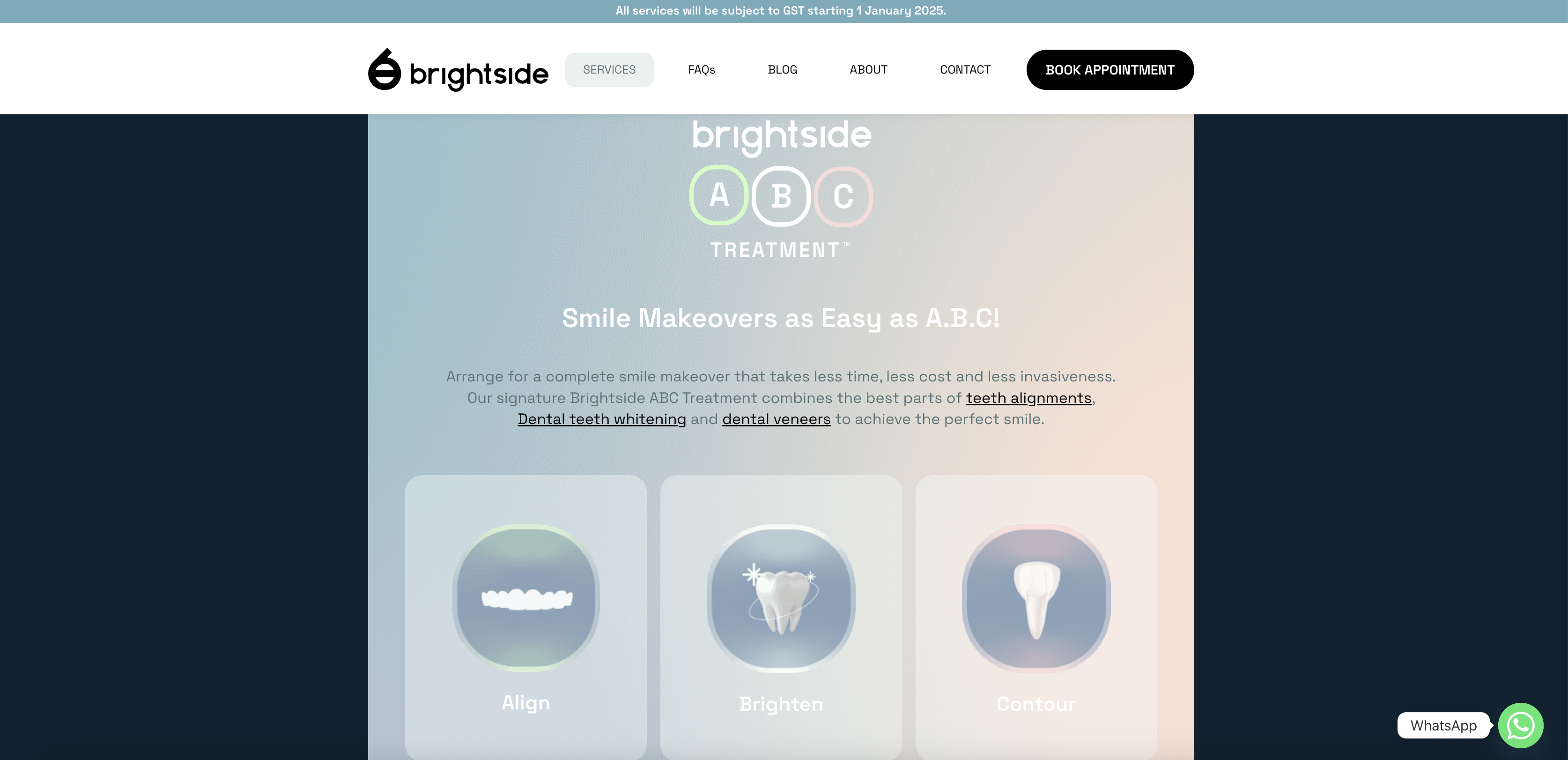
Brightside Dental

brightside.sg/services

Website: brightside.sg

Google Rating: 5 (190+ reviews)

Address: 20 Amoy St, Singapore 069855

Just 130 m from Telok Ayer MRT station, this cosmetic dentistry brings together the expertise of two practitioners.

Dr. Wilson Dan, the Clinical Director, draws from his experience running a third-generation family dental clinic and his tenure as Dental Officer In-Charge at SingHealth Polyclinics.

His partner, Dr. Jeremy Sim, a National University of Singapore graduate, honed his skills at an aesthetic dental clinic before joining forces with Dr. Dan.

Together, they’ve created a practice that offers cosmetic dentistry services while maintaining the quality care you’d expect.

View more of their services here: brightside.sg/services

Read More...

How You Are Losing Money on Food Without Realizing It

Food in Singapore is culture, identity, and daily ritual. From kopi breaks at the hawker centre to late-night prata runs, every bite tells a story. But behind the convenience and indulgence, there is also a silent leak in our wallets. Many Singaporeans are losing money on food without realizing it, not because of lavish dinners, but because of everyday habits and subtle market tactics that quietly chip away at their savings.

Take the morning kopi or teh. For many office workers, the day does not begin until that first sip. It feels like a small indulgence, just a couple of dollars each time, but stretched over 250 working days in a year, that routine can cost S$300 to S$600. Add bottled water from convenience stores and the annual expense creeps even higher. A reusable bottle and office pantry coffee sachets are modest investments that can prevent hundreds of dollars from disappearing each year.

Then there are the promotions that are not quite what they seem. Supermarkets and e-commerce platforms know how much Singaporeans love a bargain, and they play the psychology of discounts masterfully. Price tags that scream “Now S$9.95, Was S$13.50” give the impression of savings, yet the so-called original price was sometimes never charged at all. Consumers have caught brands quietly inflating prices before slapping on a limited-time offer sticker. Even the classic “Buy 1 Get 1 Free” deal is not always a deal, especially when the single unit price had been raised the week prior. What looks like a victory at checkout can, in reality, be a loss.

Food waste is another hidden drain. A 2017 study by the National Environment Agency found that nearly half of household waste consisted of food, much of it perfectly edible. One in four families admitted to having leftovers after meals at least half the time, while others confessed to throwing away expired groceries that were forgotten at the back of the fridge. These habits cost households hundreds of dollars a year. Better meal planning, shopping with a clear list, and tracking expiry dates are simple strategies that could turn waste into savings.

Image Credits: unsplash.com

Even if you are a careful shopper, shrinkflation can catch you off guard. Instead of raising prices, manufacturers quietly reduce the size of products while keeping the packaging nearly identical. A tub of yogurt that once held 500 grams may now contain only 450 grams, yet the price remains the same. A bottle of cooking oil that used to be 2 liters might suddenly be 1.8 liters. Rice, instant noodles, and even snacks have slimmed down in this way. Without checking unit prices, shoppers may not notice they are paying more for less.

There is also the convenience premium. Delivery platforms and ready-to-eat meals have become staples of modern life, but the markup compared to cooking at home is significant. A hawker dish that costs S$5 in person can easily reach S$9 or S$10 after platform fees and delivery charges. Multiply that by just a few meals each week, and the annual cost rivals a luxury holiday. Convenience saves time, but it does not always serve your wallet.

You see, the biggest financial drain for many Singaporeans is not a Michelin-starred dinner but the small daily leaks that go unnoticed. Habits like buying bottled water, falling for flashy promotions, over-purchasing groceries, accepting smaller portions for the same price, and relying too heavily on food delivery can add up to thousands of dollars over the course of a year.

Image Credits: unsplash.com

Awareness is the first step. Households can reclaim money that is better spent on meaningful experiences, investments, or even that long-postponed trip abroad by paying closer attention to these hidden costs.


Read More...