Stagflation: what is it and why should investors care?

brexit

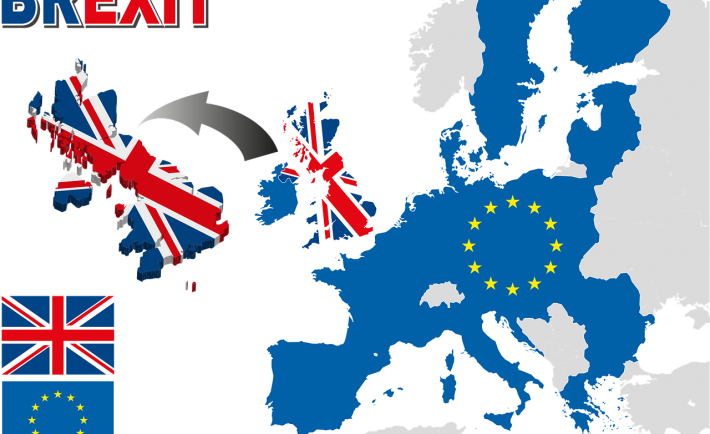
Following Brexit the term “stagflation” has reared its head, but what is it, what signs should investors look for and how will it affect different investments?

While no-one can say for a fact what the economic fallout of the UK’s vote to leave the European Union will be, the prospect of “stagflation” has been floated as the economy faces an uncertain future.

Uncertainty is the market’s biggest foe, but investors can protect themselves by improving their understanding of the UK economy and remembering that diversifying portfolios, by holding many different assets, offers the best opportunity to ride out any potential storm.

What is stagflation?

Stagflation is a description of an economy in trouble.

It is a portmanteau of stagnation and inflation. It is the term used to describe periods of persistently high inflation – the cost of goods rising – combined with high unemployment and stagnant demand or low economic growth.

The UK previously experienced stagflation in the 1970s when a jump in oil prices squeezed the life from the nation’s economic output and contributed to higher levels of inflation.

What has Brexit got to do with stagflation?

Analysts and the UK government forewarned that Brexit, at least in the short-term, would hit the UK’s economy:

Schroders’ Brexit scenario estimated a fall of 0.9% in GDP by the end of 2017 compared to our baseline forecast, and a rise in the level of CPI (consumer price index) inflation by 0.6%.

Why might the UK economy falter?

There are worries that UK companies will struggle to do business with international trading partners due to the uncertainty over which markets will still be accessible after the UK leaves the EU.

A knock-on effect could see employers stop employing and households cut spending as both companies and consumers batten down the hatches and preserve cash in fear of a slowdown.

There are concerns too that inflation will rise as sterling continues its downward spiral, pushing up the cost of imports and therefore the cost of living. This would come at a time when the UK government could be looking to raise taxes and cut spending to cover its own budget shortfalls.

Ratings agencies have already downgraded British government debt – essentially they are highlighting the risk that the government might not be able to meet its debt obligations.

It is, unfortunately, a self- perpetuating cycle and conditions appear ripe, although far from certain, that the UK could experience some form of stagflation in the near-term and investors need to remain alert.

Four indicators that investors should keep an eye on:

  1. Stagflation-linked assets such as commodities, gold, and energy stocks should see prices rise while recruitment and housebuilding stocks, and bond prices should fall;
  2. A rise in underlying inflation, which includes food and energy prices and may happen ahead of a rise in the headline inflation rate;
  3. A slowdown in consumer spending and downbeat reporting from retailers;
  4. A rise in unemployment and bleak updates from recruitment firms.

Should global investors care?

While the UK is in the eye of the storm there are risks of contagion. Brexit could encourage other euro -sceptic European nations to follow suit and hold similar referendums, putting the European project in jeopardy.

There is also the unknown outcome of the ongoing measures adopted by governments and central banks to reflate the global economy.

While there are currently few signs that the trillions that policymakers have injected into the economy will have sudden boost to inflation, the prospect is still there, and if it comes it could be sudden and violent. This could have global consequences.

What should investors do?

Consider their portfolio positions carefully. Diversification remains the key. Stagflation is not yet a real ity and might not even come to fruition, so positioning solely for it could leave investors over exposed to the flip -side.

Additionally, there might also be a risk-premium attached to some of those assets which might be considered a stagflation hedge, in other words, you might be paying much more than you otherwise would have.

A balanced portfolio offering some protection for the worst case scenario and risk to offer the chance of a higher rate of returns should provide a suitable hedge against stagflation.


Important Information
This is prepared by Schroders for information and general circulation only and the opinions expressed are subject to change w ithout notice. It does not constitute an offer or solicitation to deal in units of any Schroders fund (the “Fund”) and does not have regard to the specific investment objectives, financial situation or the particular needs of any specific person who may receive this. Investors may w ish to seek advice from a financial adviser before purchasing units of any Fund. In the event that the investor chooses not to seek advice from a financial adviser, he should consider whether the Fund in question is suitable for him. Past performance of the Fund or the manager, and any economic and market trends or forecast, are not necessarily indicative of the future or likely performance of the Fund or the manager. The value of units in the Fund, and the income accruing to the units, if any, from the Fund, may fall as w ell as rise. Investors should read the prospectus, available from Schroder Investment Management (Singapore) Ltd or its distributors, before deciding to subscribe for or purchase units in any Fund. Funds may carry a sales charge of up to 5%.


 

Read More...

Different Ways To Define Financial Independence

Whether you call it Financial Independence or Financial Freedom, the first step to achieving autonomy is by defining it.

If you Google this term, you will find that there is an abundance of definitions available. However, let us focus on these four:

1. BY CASH FLOW

The most common definition of Financial Independence relates to cash flow. Many experts accept the idea that it is the “state of having sufficient personal wealth to live, without having to work actively for basic necessities.” Simply put, you passive income is able to cover your living expenses. Passive income sources include rental property, royalties from intellectual properties (e.g., books), trust funds, online business, investments, and pension plan.

Quantify your progress by calculating the percentage of living expenses that your passive income covers. When you reach 100% then, you attained Financial Independence by this definition. Having a full-time job is certainly optional with this circumstance!

2. BY WORRYING LESS

For many people, Financial Independence is achieved once they can use their money to banish their stress. These people focus more on what they can accomplish – in the terms of minimizing the “gap”. The gap that I am referring to is the division that exists between your income and your spending.

By this definition, you can increase the gap and reach Financial Independence quicker by spending less and earning more.

3. BY HAVING NO DEBTS

Financial Independence is characterized by being off the debt latch. While some debts are necessary and can be easily paid off, others are unplanned and difficult to pay off. Eliminating the latter is a crucial step to gaining financial freedom.

There are numerous ways to minimize your debts and build a better relationship with money, learn some of them by checking out our helpful posts, here.

4. BY DOING WHAT YOU WANT

A refreshing definition of Financial Independence is shared by Investopedia. Its contributor believes that Financial Independence “should mean the ability to live more or less as one wants to, within reasonable limits.”

Financial Independence can be seen as being able to do and choose the path that you desire the most. Absolute autonomy mean not always be synonymous early retirement as it can refer to your power to quit a horrible job.

Image Credits: pixabay.com

Image Credits: pixabay.com

In my opinion, this is the most achievable definition among the four.

Read More...

Brilliant Ways To Simplify Your Finances

1. UNTANGLE YOUR STREAMS OF INCOME

If you are juggling through your day job, online business, personal blog, and weekend side-job…take a breather!

Multiple sources of income sounds great in theory but it can be very challenging at times. I can attest to this statement as I am freelancer. When new opportunities are handed to you, analyze if you (and your schedule) can handle another weight. You do not want to waste your precious time on things that are not necessary.

2. ALLOT MONEY USING LAST MONTH’S INCOME

Budgeting your money is efficient for two reasons. It brings you a sufficient cushion as you are a month ahead of your bills. Also, it is very helpful for people with irregular income.

Image Credits: wikihow.com/Do-Envelope-Budgeting

Image Credits: wikihow.com/Do-Envelope-Budgeting

3. CUT DOWN YOUR BANK ACCOUNTS

In a world filled with choices, most people have several number of financial accounts. You may have an account that brings highest interest or another that brings the highest shopping rebates. More than being complicated, the constant shuffling between these accounts can get messy. This is why you must narrow down the number of your accounts.

4. REDUCE YOUR JUNK

Reduce your physical and virtual junk authorizing creditors or vendors to issue bills using one method. If you want to go paperless, keep digital copies of your important documents on the “cloud” or on an external hard drive. If you are old-fashioned, organize all your documents in labeled folders or boxes.

5. SET SMART FINANCIAL GOALS

Develop a habit of financial goal setting to know where you are going and to plan how you can get there. Write down your financial goals with a trusted witness and contemplate the monetary milestone you would like to accomplish in the next 2 to 5 years. Track down your monthly progress.

6. CONSOLIDATE YOUR BILLS

Are you tired of receiving 3 separate bills for your landline, hand phone, and internet services? Consider consolidating all of them in a single bill by signing on bundled services. For example, Singtel’s Fibre Home Bundle (1 Gbps) offers the following:

a. Fibre Broadband,
b. Wireless Dual-band Router
c. 4G Mobile Broadband Plan, and
d. Home Digital Line with free unlimited local calls.

This plan costs S$59.90/month with a contract of 2 years. What is nice about this plan is that it offers an additional “10% off monthly Mobile subscription” (T&C apply).

Image Credits: pixabay.com

Image Credits: pixabay.com

By bundling these services together, you just eliminated 2 monthly bills!

Sources: 1, 2, & 3

Read More...

Main Implications Of Brexit To Singapore

One of the most talked about issues surrounding the world today is the Brexit. Brexit is shorter term that refers to “British Exit”. It is the strong vote of British people to detach themselves from the European Union (EU). This referendum impacted the global markets including that of Singapore’s.

For starters, Brexit contributed to the changes in exchange rates as the value of Pounds drop in its lowest level in decades. Aside from this shift in currency, the Brexit has implications in Singapore’s trade, properties, and investments.

CURRENCY

The British Pound is in its weaker state – as of the moment.

To illustrate, imagine Sally is a Singaporean expat who moved to United Kingdom 6 years ago. Being financially savvy, she made a plan to save some of her money for retirement back home. Since Sally kept a relatively huge sum of money in Pounds, she was surprised to find out that her funds are worth less than they were a week ago.

Aside from the individuals like Sally, British companies are affected by the weaker British currency. It will cost them more money to grow and expand their businesses here.

TRADE

Unlike other ASEAN countries, the Singapore government has concluded their negotiations for “Free Trade” with the European Union. Within the Free Trade agreement, any imports and exports between EU and Singapore are more affordable and are subjected to lesser restrictions. This greatly helped our transactions as we imported over S$44.46 Billion worth of goods and products from the EU last year.

An issue floats as majority of our EU trade was with the Brits. There seems to be an uncertainty whether Britain will have more or less bargaining power over Singapore after the Brexit.

PROPERTY

According to Knight Frank, Singaporeans lead the list of Asian buyers who patronized United Kingdom commercial properties in 2015. With the prevalent clamor of Singaporean buyers and the ambiguity of the British market, banks such as UOB and DBS had to act quickly.

In a statement, UOB says that they “will temporarily stop receiving foreign property loan applications for London properties.” While, DBS is advising its lenders to be more cautious.

INVESTMENT

Behind Japan and Hong Kong, Singapore ranks third as the largest investors in EU. This is why the population of the Singaporean investors will be surely affected. In particular, a stock called GL Ltd (SGX: B16) encompasses more than 5,000 hotel rooms in London. If the British currency will decrease further, it can pressure GL Ltd’s profit in Singapore dollars.

Image Credits: pixabay.com

Image Credits: pixabay.com

As a solution, experts suggest to diversify your investments in terms of currency exposure.

Let me close with the post that PM Lee Hsien Loong published in his Facebook page:

https://www.facebook.com/leehsienloong/posts/1142353405827364
“Singapore will continue to cultivate our ties with Britain, which is a long standing friend and partner. We hope in time the uncertainty will diminish, and we will make the best of the new reality.”

Sources: 1, 2, & 3

Read More...

Factors Affecting The Currency Exchange Rate Of Singapore

The Currency Exchange Rate is one of the most important means to quantify the country’s level of economic stability and economic health. It refers to the “rate at which one country’s currency may be converted into another”.

The market where these currencies are regularly traded is called Forex. The Forex market, the most liquid market in the world, includes all of the global currencies. There is no central marketplace for trading these currencies; however, there are financial centers in Singapore, New York, Tokyo, Zurich, London, Sydney, and Paris.

Exchange rates fluctuate regularly with diverse market factors affecting it such as inflation and government debt. If you are planning to send or receive funds from overseas, you need to be in constant lookout of the changes in the foreign exchange rates.

INFLATION RATE

A country’s inflation rate causes a change in the value of its currency. For example, if Singapore experiences high inflation, you will observe a depreciation in the Singapore Dollars (SGD). This high inflation is typically related to the higher interests rates. In contrast, if Singapore experiences low inflation, you will observe an appreciation in SGD. And the prices of the goods and services will increase at a slower rate.

The average inflation rate in Singapore from 1962 to 2016 is 2.69% – reaching its all time low of -3.10% in 1976.

This observable negative inflation or deflation is not good. It happens when the prices of the commodities fall because the supply is greater than the demand. It can ripple the economy and later lead to high unemployment, recession, and depression.

GOVERNMENT BUDGET

A government’s budget surplus or deficit have an impact to the currency exchange rate. For instance, when our government’s budget surplus is expanding, the exchange rate of SGD will grow competitive.

The financial regulatory authority and central bank of Singapore is called The Monetary Authority of Singapore (MAS). An important institution that supports the effectiveness of the interventions given by MAS is the Central Provident Fund.

INTEREST RATE

The interest rates set by the central banks influence the customers and investors. First, it affects the borrowing behavior of customers. If the economy is overheated, central banks may increase its interest rates to make borrowing more expensive and discourage people.

Second, it affects the balance between the investor’s safety of funds and the yield returns. For example, the yields for assets in SGD increases as interest rate goes up. This leads to an increased demand by investors and eventually lead to the appreciation of Singapore’s currency.

GOVERNMENT DEBT

The government debt (public debt or national debt) is the balance owed by the government. Countries with immense amounts of government debt are less likely to receive foreign investors and foreign capital. As an effect, decrease in the value of their currency exchange rate will follow.

The  is 105.6% as of 2015. This signifies the country’s ability to pay back its debt.

Image Credits: pixabay.com

Image Credits: pixabay.com

Sources: 1, 2, 3

Read More...