
Watch 倦子2: PSLE GO to understand the pressures kids face when growing up

By Jaspar Lim

If you are reading this, be glad that something has not yet happened to your child.

Child suicides are on the rise, as youngsters were pushed beyond breaking point and ended their lives. 10 fingers 10 toes. That was all that mattered in the past.

Now children are measured by a different set of numbers. 70 marks implies lack of effort. 80 marks is not good enough. 90 marks means room for improvement. When is enough?

zihuis_journal

Stills: Zi Hui Journal, 倦子2: PSLE GO

倦子2: PSLE GO shouts out this message. Your child is tired, yet still trying. Remember, not regret.

As a parent, I urge you to help spread this message. Treasure your child, not their grades. It is not too late.


I was teleported back to a nostalgic era when I was invited to a premier screening of 倦子2: PSLE GO. The venue was perfect in echoing chapters of the past. Numerous movie posters of old greeted me as I entered. It reminded of my childhood, a much simpler time.

Every morning I looked forward to school to make new friends. Not to compete with my classmates. Each time the school bell rang, I dashed out of class to join my friends. It was a beautiful childhood. Do you remember those lovely memories? These moments made me a happy and balanced adult.

Your child may have been denied this privilege to feel happy. Do you remember when you first held your new born? Back then, your child was perfect. You do not remember. Your child became less every day, and had to try harder to achieve more just to make you happy.

10 fingers 10 toes. That was all that mattered in the past. Now children are measured by a different set of numbers. 70 marks implies lack of effort. 80 marks is not good enough. 90 marks means room for improvement. When is enough to satisfy your expectations?

zihui_depress_scene

Stills: Zi Hui depressed, 倦子2: PSLE GO

Would you relent only when you witness an irreversible end? Suicides are no longer uncommon among the young. Each news report is heart wrenching; deepest pain only the parent would feel. It is an inevitable end, a result because of our actions, our inaction in protecting our most loved from the harsh judgement of others (and ourselves).

As a professional working adult, every day is an exam. Every hour we endure endless challenges. Do we score 100 marks each time? At home, we comfort ourselves with rest. We pamper ourselves with rewards. Yet, we forcefully push our child through additional stress after school. Your child needs your encouragement, not your enforcement.

倦子2: PSLE GO shouts out this message. Your child is tired, yet still trying. Remember, not regret. A great team effort, displayed most selflessly as Splash Productions embarked on a non-profit filming journey. Splash is to hit something or someone with full impact. In that moment of contact, the origin spreads out and covers a larger area than anticipated.

Splash Productions did exactly that. Impact and Influence. Never once had I been so proud to see familiar names when the credits were rolling. As a parent, I urge you to help spread this message.

Treasure your child, not their grades.


You can watch the video here:

Websitehttp://www.juanzi.sg/
Facebookhttps://www.facebook.com/juanzi2pslego


HELPLINES

  • Samaritans of Singapore 
(24-hour hotline): 1800-221-4444
  • Tinkle Friend: 1800-2744-788
  • Singapore Association for Mental Health: 1800-283-7019
  • Care Corner Counselling Centre 
(in Mandarin): 1800-3535-800

Read More...

Why Many Singaporeans Are Not Tying The Knot

About 4 out of 5 Singapore residents express their intentions to get married. But, why are they not pursuing what their hearts deeply desire?

In 2013, 83% of the participants in the survey by National Population and Talent Division said that they want to tie the knot. This figure is slightly lower than the reported 85% in the previous survey (2007). We can only predict that the decline will continue by 2019.

The leading reasons why most of the respondents are not employing immediate marital plans are saving up for the wedding and saving up for the housing. Furthermore, 84% of the 4,646 participants intended to have 1-2 children only. Those people who are not planning to have any children or to have an extension to their family cited financial costs as one of their top reasons. It does not take a notable genius to understand how money gravely influences the Singaporean’s approach to marriage and parenthood.

Many residents of Singapore are delaying the the event of matrimony as they want to earn more money, to build an attractive career, and to be financially independent. These factors push up the national median age of first marriages.

MAKING MONEY IS HAPPINESS 

“Making money is happiness…”, said Nobel Peace Prize winner Muhammad Yunus. Along with happiness, money seems to go hand-in-hand with marriage. Many Singaporeans perceive that the primary focus of life is building careers and gaining more pay. A relatively significant amount of the population delay marriage to save money for cushioning the high cost of living. They are wary about certain expenses too. I cannot deny the fact that the wedding ceremony, home renovation, and infant care costs an overwhelming wealth!

The recent report by the Department of Statistics Singapore support these sentiments. It found that the median age for grooms at first marriage rose to 30.3 years old in 2015. During the same period, the median age for brides rose at a faster rate to 28.2 years old. These respondents wanted to attain “some level of success” to attract potential partners.

I AM A STRONG WOMEN WITH OR WITHOUT THIS OTHER PERSON

“I am a strong woman with or without this other person…”, said American performer Queen Latifah.

It is probably no coincidence or sorcery that as women gained more economic power in the recent decades, they have been less likely to get married. Women are less likely to wed due to financial security alone. Dr. Norman Li, the Associate Professor of Psychology at Singapore Management University, has his own take on this trend. He said that: “Women are now becoming more and more educated and earning increasingly more income. So, there are increasingly fewer men who meet their standards.”

Do you agree with Dr. Norman’s statements? Well, one thing is for sure. Birth rates have been hit due to women marrying later or not marrying at all.

Image Credits: pixabay.com

Image Credits: pixabay.com

In order to entice more Singaporeans to get married and have children, institutions may employ different rewards. Banks may start to offer matrimony loans that specialize on the expenses of the wedding and the early years of marriage. Moreover, employers may provide a baby bonus (i.e., a cash gift) or a paid maternity leave.

Sources: 1 & 2

Read More...

Let Your Child Learn Beyond Textbook Knowledge With These Enrichment Centers

As a holistic nation, Singapore has a competitive spirit. Most (if not all) Singaporean parents start to shape the academic skills of their children early on due to the fear of falling behind the fierce system. To accomplish this, they employ the services of several enrichment or tuition centers.

Searching for the “perfect center” seems like a hunt for the most delectable candy at Candylicious. There are hundreds of attractive options! Choosing a singular center is often a confusing, uncertain, and difficult task. You can either send your child to a competent center that breeds Ivy league students or to a mediocre institution taught by incompetent teachers.

You need to be able to spot a diamond among the duds. To do so, you must analyze if the center is suitable for your child and if the teachers impart things that are beyond what the textbook says. Few enrichment centers in Singapore offer just that! The short list includes The Learning Lab, Mathnasium, SmartLab Education Centre, and ThinkersBox.

Let me start with the The Learning Lab. The Learning Lab is a premier provider of tutorial programs for primary, secondary, and pre-tertiary levels. Aside from stimulating academic excellence, they are in the business of cultivating world-readiness. You see, the center conducts a series of events including creative writing workshops and Ivy Summit Series. The creative writing workshops were run by media personalities while the Ivy Summit Series were run by Harvard undergraduates. These efforts help establish a good reputation among parents, students, and educators in Singapore. Do not get me started about their alumni who studied in prestigious universities such as Princeton and Oxford! All these come at a relatively costly price tag. Expect fees of about S$30 per hour for primary students.

The next center has a niche as it focuses on Mathematics. The Mathnasium is not your average Maths tuition center! In fact, it has a reputation of being less stressful and more enjoyable. The people behind Mathnasium aim to increase the child’s appreciation for the subject in order to improve his or her academic performance. They use a unique way of teaching that was developed over 30 years ago. If you are skeptical about it, you will be happy to know that they have several branches all over the globe! So, browse their courses that range from Primary 1 to Secondary 4 Maths.

The third center is called SmartLab. What started off as a humble classroom in Bishan has expanded to providing quality tutorial classes that incorporates Information Technology. SmartLab was one of the early adopters of modern technology by equipping their classrooms with computers. More than regular classes, SmartLab offers FREE support sessions twice a month for students who need the extra hand. What separates it from other centers is its “Results Guranteed Programme” whereby parents pay a lump sum of money in exchange for an agreement (e.g., achieving a certain grade). You will get your money back if the agreement is not achieved. The lump sum is between S$2,500 to S$5,850.

The last, but not the least is ThinkersBox. It is a specialist center for brain development that caters to children aged 5-12 years old. The teachers at ThinkersBox impart the most fundamental aspect of schooling, which is rarely taught in schools. That aspect is cognitive or thinking skills. The dynamic duo behind the ThinkersBox believe that “textbook knowledge and grades will not be sufficient in a fast-changing and unpredictable environment”. I certainly agree!

Enrichment centers are becoming more of a necessity than a luxury. As parents, you must find the most suitable center to improve your children’s learning. Look not only at the reputation of the brand but also at other factors such as class size, tutor’s competence, and testimonials.

Good luck on your search! 🙂

Sources: 1 & 2

Read More...

Extremely Entertaining Games To Educate Your Kids About Money

Before diving into the rising world of freelance, I previously worked as an early childhood teacher for children aged 5 to 12. I can encapsulate my teaching experience with a single word – fulfilling. One of the most profound lessons that I absorbed was that children learn best when they are having fun. You may let them think they are playing a game with an underlying agenda. For instance, you may turn counting into entertaining games for your family.

Games like these act as great teaching tools for parents and guardians alike. It ignites a kids’ curiosity and encourages them to ask questions about money.

1. ASSORTED CURRENCY MAGNETS

Many Singaporeans have a hobby of collecting magnets from the countries that they previously visited. Mimic this concept by plastering currency magnets into your fridge. Begin by purchasing self-adhesive magnets online (for about S$28.39) or on Daiso (for as low as S$2). Attach the adhesive to the back of the 5, 10, 20, and 50 cents. Make another set by attaching the adhesive on the coins’ front side of coins with the same denominations. You can complete different activities with these currency magnets.

On the first challenge, you may ask your child to match the coins’ backs with their fronts. The second challenge may entail your child to “pay” for every favor or toy that he or she asks.

2. AMAZING UNO CARDS

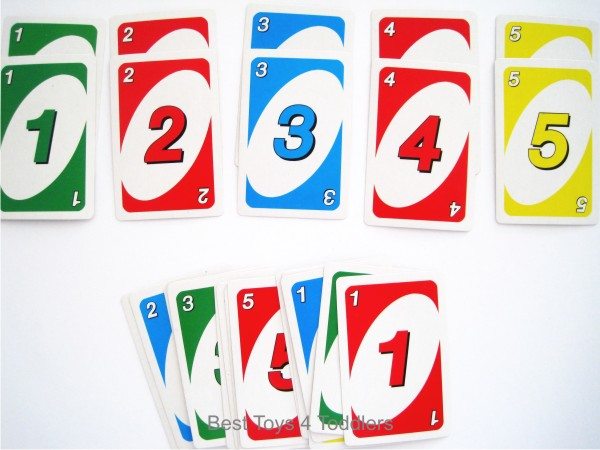
Teach your kid about the basics of counting and recognizing numbers by buying the UNO cards. UNO is not your average matching game! It is a card game that entails color, number, and symbol coding. The premise is too straightforward that your child will be able to absorb it right away. Alternatively, you may modify the instructions to suit your child’s level of thinking.

Image Credits: besttoys4toddlers.com

Image Credits: besttoys4toddlers.com

For instance, you may ask your 3-year-old child to match the cards that have the same number and color. Keep track of the winner by employing a point system.

3. MAKE YOUR OWN CASH

Art is one of the children’s main modes of communication. So, communicate to your children in a language that they understand by letting them design their own versions of the dollar notes. Whose faces shall they feature? What buildings or infrastructures shall they put at the back?

Provide different art materials and get them to think creatively!

4. SHOP ‘TILL YOU DROP

Gather at least 8 toys and place a price tag on each one. Divide your Singapore notes and coins to your children and let them decide which toys they want to “buy”. In this round, you are the cashier or the owner of the shop. Mix and match the prices of the items and the roles of the players (e.g., your children are the co-owners while you shop).

Image Credits: pixabay.com

Image Credits: pixabay.com

This fun activity will help your kids to figure out the best way to divide and spend their cash.

Sources: 1 & 2

Read More...

How To Deal With Relationship Feuds About Money

The moral values that we learned taught us that relationships are far more important than money. Conflict is bound to happen when people put more weight on material items over interpersonal relationships or when they see money as a measure of the relationship’s worth.

Deal with the monetary feuds to save your various relationships.

1. PARTNER’S PERSPECTIVES

Differences in each others perspectives is inevitable when two people come together. Although you love each other dearly, it is rare to find couples who always see eye to eye. This is why it is important to start understanding each other’s views about money. Explicitly discuss about your beliefs on financial issues and spending habits. For instance, a partner who is a hardcore saver may view money as an important currency that shall not be wasted.

Learn to put yourself in your partner’s situation by recognizing his or her financial strengths. Let us put this in perspective by imagining that two people are buying a flat screen television. Half of this relationship is a spender while the other half is a saver. They can compromise by combining the spender’s ability to commit to a new purchase with the saver’s ability to get a good deal!

2. FIGHTING FOR INHERITANCE

The authors of the informative book entitled “The Family War: Winning the Inheritance” vividly explained what it is like to be tangled in estate disputes. Envision your own family tree with interconnected branches that share a single trunk. After it has been shaken by a strong force (i.e., war over inheritance), one or more of its branches are broken down. The sad part is that they may never grow back.

As you can see, money and death can do strange things to a close-knit family. Lawyers find this scenario as one of the most challenging cases to handle. This is why some of them advocate the drafting of a will and planning for estate distribution while the client is still alive. You must also appoint a trusted person to make medical decisions should you become incapacitated.

3. MARITAL WOES

Financial issues is among the top reasons why Singaporean marriages fight and eventually part. A committed couple who suffers from serious monetary problems will usually face loads of tension and stress, which often translates to heated quarrels.

Prevent a fueled fight by fully disclosing your financial circumstance to your significant other. This is uncomfortable and awkward at first but, you have to try. Tell your partner about your outstanding debts, financial obligations, income sources, and other assets. This will make you empathize with each other more. From time to time, do not forget to check if your financial goals are still in sync.

4. BORROWER VS. LENDER

To deal with the disputes over the money that you loaned, you can show your written agreement and other supporting documents.

You may have dodged the constant knocking of the bank by loaning from a friend or a family member but, you must still treat it as a business matter. Putting the terms of the loan in a handwritten format protects both parties as well as your relationship. After all, borrowing a substantial amount of money is not the same as borrowing a vehicle!

Get everything in writing if you are borrowing a large sum of money or if the lender is strict when it comes to full repayment. The agreement is called a promissory note. Have the promissory note signed by both parties and and a lawyer (if possible). This will ensure that pursuit of legal actions when necessary.

5. GRANDPARENT’S FAVORITE

If your mature child and his or her spouse are having a hard time drawing a healthy financial conclusion, you may offer to help them out especially for the sake of your grandchildren. As a grandparent, it is acceptable to give out money to your family for a specific purpose. You may also highlight that the money must be used for that purpose. However, it does mean that you are entitled to manage all their financial affairs.

Financial advice should be given only if asked. You do not want to be a “know-it-all” parent who constantly dishes unsolicited advice. Your children are no longer toddlers that you have to guide. Although, you can always make a polite offer.

6. FRIENDLY DISPUTES

No matter how much you disagree with your friend’s unhealthy spending habits, you must take a step back from those negative feelings. Do not immediately burst into anger when you see his or her credit card bills. Blaming your friend for his or her outstanding debt will not help too. It is crucial for you to remove anger and frustration out of the equation.

Break the cycle of constant fighting and help your friend out by discussing the matter maturely. Agree to support each other along the way.

Image Credits: pixabay.com

Image Credits: pixabay.com

Do not let your financial woes to get the best of your meaningful relationships!

Sources: 1 & 2

Read More...