Picking the right person: A guide for promoting employees

woman receives a praise in the office

You’re a boss, and one of your top priorities is to promote the right people to the right positions.

But before you promote someone, there are a few things you need to consider. In this article, we will discuss the key factors to look for before promoting an employee. We will also provide some tips on how to promote employees in a way that benefits both them and your business.

How to evaluate employee performance

Promoting someone is a big decision—and one that can have a significant impact on your business. So how do you go about evaluating employee performance?

The best place to start is by looking at the qualities that are essential for a managerial position. Are they articulate? Are they able to take initiative? Can they handle stress? Do they have a good work ethic?

You also want to be on the lookout for employees who are proactive and take the initiative to go above and beyond their job duties. These are the employees who will help your business grow and thrive.

And finally, subtly ask exploratory questions to get a sense of what the employee wants from a managerial position. This will help you gauge their interest in moving up the ranks.

Is the employee ready for a leadership role?

Assess their readiness.

This includes looking at whether they can manage themselves, whether they’ve begun to change their vocabulary from “mine” to “ours,” and whether they have a proven track record of problem-solving.

Giving employees room for growth and development

a seminar presentation

Image Credits: unsplash.com

When you promote an employee, you’re allowing them to grow and develop their skills.

Remember, a talented employee who isn’t allowed to grow will eventually move on to a company that will.

There are a few things you can do to encourage employee growth and development:

  • Reward and recognize exceptional work. This will motivate employees to continue working hard and strive for excellence.
  • Keep employees engaged by providing continuous feedback. This will help them understand what you’re looking for and what they need to do to improve.
  • Implement processes to evaluate the strengths and weaknesses of employees. This will help you identify any areas that need development, and provide employees with the tools they need to grow professionally.
Training and mentoring new team leads

Do they know how to manage a team? Do they understand what their new responsibilities will entail?

If not, you need to provide them with a mentor who can help guide and support them as they transition into their new position. Another option is to send them on training courses so they can learn the skills they need to be successful.

When looking to promote an employee, assess their strengths and weaknesses to determine if they are the right fit for the job. In addition, it is crucial to provide employees with the necessary training and resources to help them succeed in their new roles. By following the abovementioned tips, you can help ensure a smooth transition for both your employee and the company.


Read More...

Are you too positive? Understanding the hazards of having an overly optimistic outlook

smiling woman keeping her fingers crossed

You might think that being positive all the time is a good thing, but did you know that it can have some negative consequences?

Believe it or not, there are some dangers to being overly optimistic.

What are the pitfalls of being overly positive?

When you’re overly positive, you tend to exaggerate the good and ignore the bad.

You become so confident in your ability to see the best in every situation that you take unnecessary risks. And all of this can lead to some pretty big problems.

You might find yourself in over your head. You might take on projects that are too risky or agree to unfavorable terms. You might also end up alienating people who don’t share your rosy outlook on life. People may also see your confidence as naivety or even arrogance.

How to tell if you are an overly optimistic person

Do you tend to take things at face value and refuse to believe that bad things could happen to you? If this sounds like you, then there’s a good chance that you are an overly optimistic person.

While there’s nothing wrong with having a positive outlook on life, being overly optimistic can have some serious drawbacks. For one, it can lead to impracticality and overconfidence. You may become so convinced that everything will work out in your favor that you refuse to take precautions or put in any effort.

Overly optimistic people can be harmful to themselves and others. When we refuse to acknowledge negative experiences, we are doing ourselves a disservice. It’s important to allow ourselves to feel sadness, anger, and other difficult emotions to move on. Pretending that everything is sunshine and roses can prevent us from dealing with our problems head-on.

Achieving a healthy balance of optimism and realism
legs on a balance board

Image Credits: unsplash.com

While it’s good to be optimistic, it’s also crucial to be realistic.

After all, you don’t want to set yourself up for disappointment by expecting too much from life. It’s this balance of optimism and realism that can help you achieve true happiness and well-being.

In fact, studies have shown that a combination of realistic and optimistic thinking can promote well-being. People who embrace the two tend to be more satisfied with their lives and have fewer episodes of depression. They’re also more likely to seek out help when they’re struggling.

On the other hand, overly optimistic people can sometimes fall victim to the optimism bias. This is a cognitive bias that skews our knowledge evaluation in positive and self-serving ways. We often give ourselves too much credit, while downplaying the risks and potential negative outcomes of our choices.

How to dial it back when you’re too positive

If you’re someone who tends to be a bit too positive, there are a few things you can do to dial it back.

First, try to be more mindful of the words you use. If you find yourself saying things like “always” or “never,” try to replace those words with more realistic ones.

Second, be more aware of the way you respond to other people’s problems. When someone comes to you with a problem, resist the urge to try and fix it or make it sound not as bad as it is.

Lastly, don’t be afraid to embrace your negative emotions. It’s okay to feel sad, angry, or frustrated sometimes. Allow yourself to feel those emotions instead of pushing them down with false positivity.

An overly optimistic attitude can do more harm than good. If you ignore clear warning signs or downplay potential risks, your overly optimistic attitude can lead to some pretty big problems. Additionally, if you’re always putting a positive spin on everything, people may start to take advantage of you or rely on you too much. So while it’s good to be optimistic and have a positive outlook on life, too much of a good thing can be bad. Try to find a balance between being too optimistic and being too negative as you navigate through this year.

Read More...

Take control of your business by understanding and improving your sales conversion rate

woman making a purchase online with her credit card

You may have the best product or service in your industry, but if no one is buying it, you’re not going to make any money. The fact is, most businesses could do more to improve their sales conversion rate.

What is a sales conversion rate, you ask? In its simplest form, it’s the percentage of people who visit your website or come into your store and then buy something. In other words, it’s how well you’re turning browsers into buyers.

If you’re not happy with your current conversion rate, don’t worry—we’re going to show you how to improve it. We will start by explaining what influences a sale, then give you some tips on how to increase your conversion rate. Let’s get started!

Analyzing your sales funnel

Before you can start improving your sales conversion rate, you need to understand where it stands now. This means taking a look at your entire sales funnel and analyzing every step of the user journey.

This starts at the top of the funnel, where you’re capturing leads. Are you capturing all the leads you could be? Are you using effective lead capture forms and techniques? Are you segmenting your leads correctly so that you’re targeting the right people?

Once you have their contact information, are you then providing them with compelling content that entices them to convert? Is your content relevant to their needs? Is it helpful? Is it engaging?

Once they’ve been convinced to become customers, are you making it easy for them to purchase? Are your checkout processes smooth and simple? Are you providing them with all the details they need? Are you offering them incentives to buy?

Start by analyzing your sales funnel and making changes where necessary. The more effectively you can guide potential customers through your sales funnel, the more likely they are to convert.

Optimizing your leads & reviews
user reviews

Image Credits: instapod.com.sg

When it comes to optimizing your sales conversion rate, there are a few things you can do to improve your chances of making a sale.

Narrowing down your leads is one way to improve your results. By targeting only those most likely to buy from you, you’re eliminating the need to convert those less likely to buy. This makes the process easier for both you and your customers.

Another way to improve your conversion rate is by adding an exit-intent popup. This will give customers one last chance to consider buying before they leave your site. And if they don’t buy, it’s still a great way to capture their information and follow up with them later.

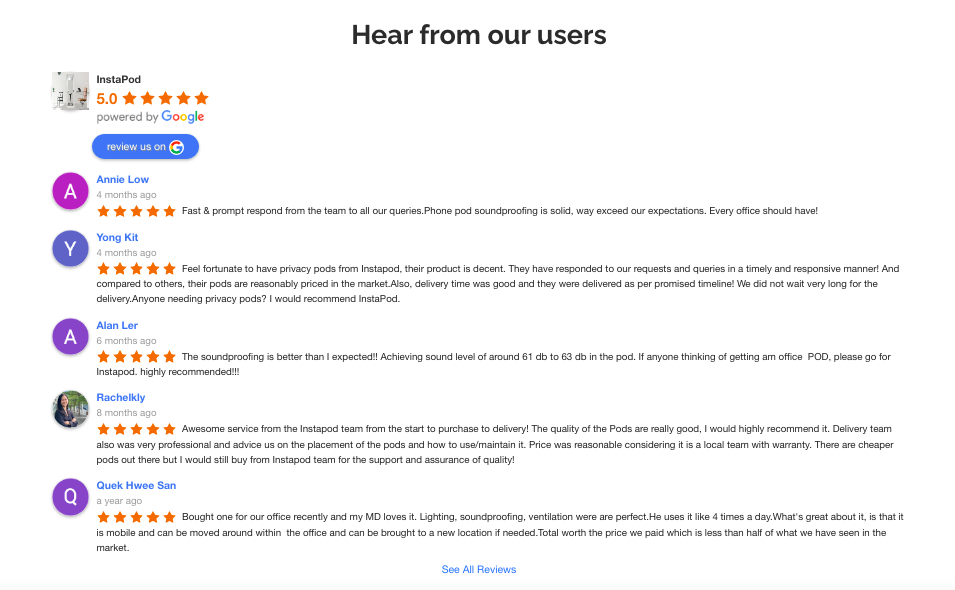
Finally, building trust with your customers is key. Showcasing social proofs, such as customer reviews and testimonials, is a smart way to do this. This helps create a sense of authenticity and builds confidence in your brand.

Enhancing the customer experience

Another way to increase your sales conversion rate is by giving your visitors a personalized experience. You can do this by tracking their behavior on your website and offering them content that’s relevant to their interests.

Also, focus on providing top-class customer service. This means being responsive to customer inquiries and concerns, offering a hassle-free returns policy, and providing additional details to product descriptions.

Utilizing AI & automation to increase conversion
a white robot

Image Credits: unsplash.com

If you’re not utilizing AI and automation to increase your conversion rate, you’re seriously missing out. Here’s why:

  • AI analytics unlock robust customer data. It provides insights into customer behavior that would otherwise be hidden. This data can be used to improve your marketing and sales strategies, and ultimately increase your conversion rate.
  • Automation enables businesses to focus on more essential things. By automating repetitive tasks, businesses can concentrate on providing exceptional customer experiences. And we all know those happy customers are more likely to convert.

So if you want to take control of your business and increase your sales, utilizing automation and AI is the way to go.

You could be leaving money on the table by not optimizing your sales conversion rate. Don’t be content with merely increasing traffic to your site—you need to make sure those visitors are turning into paying customers. If not, you’re just wasting your marketing spend.

Read More...

Stop worrying, start doing: Why you should act now

brown wooden blocks

We all know that one person.

You know, the one who’s always worrying and thinking and never taking any action. They’re stuck in their head, and it’s holding them back from achieving their goals.

I used to be the same way. I would overthink every decision, analyze every possible outcome, and never take any action. But eventually, I realized that this approach wasn’t getting me anywhere. I was stuck in a cycle of paralysis by analysis.

So, I decided to change things up. And it worked. I started taking small steps and seeing results. And you can too. All you need to do is stop worrying and start doing.

What is the thinking trap?

We all know that voice in our head that tells us we’re not good enough, that we can’t do it, or that we’re just not cut out for this. That’s the thinking trap in action, and it can be incredibly paralyzing.

This is a negative pattern of thought that we get stuck in, and it’s one that often fuels anxiety and keeps us from taking action. It’s a type of cognitive distortion, which are thoughts that are not based in reality. And once we get caught in these traps, it can be difficult to break free.

How to break out of the thinking trap
man in deep thoughts

Image Credits: unsplash.com

When I’m stuck in the thinking stage, it feels like I’m trapped in a never-ending cycle of worry and self-doubt. It’s like my brain won’t stop churning out thoughts, and even worse, most of them are negative.

How do I break out of this trap? Well, the first step is to separate thoughts from events. Once you’ve identified those thoughts, challenge them. Ask yourself whether they’re true, and whether they’re helpful or not.

Most of the time, our negative thoughts are based on irrational beliefs or thinking traps. Once you recognize these traps, you can start to say “stop” to worry-ridden thoughts.

Strategies for motivating yourself to take action

When it comes to getting motivated, a lot of people think that you need to feel a certain way to take action. And that’s a lie.

You can get moving by setting one specific, achievable goal and then breaking it down into smaller steps. Once you get started on those small steps, the momentum will carry you forward. And before you know it, you will be achieving your goals left and right.

Overcoming fear and taking risks
man leaping forward

Image Credits: unsplash.com

The bottom line is that if you don’t take risks, you will never grow. And if you never grow, you will never get better. So if you’re stuck in a rut, the only way out is to take a risk.

Of course, it’s easier said than done. We’re wired to avoid pain and seek pleasure, so it makes sense that we would want to stay in our comfort zones. But comfort zones are just that—comfortable. They’re not exciting, and they don’t offer any growth potential.

If you want to achieve something great, you have to be willing to put yourself out there and take some risks. And yes, there will be times when you fail. But each time you pick yourself up and dust yourself off, you will be that much closer to success.

So stop living in fear and start acting with courage. The only way to reach your full potential is to go for it—even when it seems scary at first.

Making action a habit

The last step is to make taking action a habit.

And this is going to be different for everyone. But the goal is to get to a place where taking action is your default setting instead of inaction.

For some people, this might mean setting a weekly goal and making sure they take at least one action step towards that goal every day.

For others, it might mean identifying the areas of their life where they tend to get stuck in inaction and brainstorming possible solutions. And for others, it might mean coming up with a list of things they can do right now—in this very moment—to move closer to their goals.

The crucial thing is to find what works for you and then make taking action a habit. Because the more you do it, the easier it will become—and before you know it, you will be taking action without even having to think about it.

When it comes to making change, it’s normal to feel overwhelmed. We spend so much time thinking about things that we don’t take action. We get lost in the planning and forget to enjoy the journey. But what if you don’t have to have it all figured out? That you can start small and work your way up? So, stop worrying and start doing. You will be surprised at how much you can accomplish when you stop waiting for the perfect moment and start taking action today.

Read More...

Know your audience: How to establish sticky brand loyalty

retail store

When it comes to establishing sticky brand loyalty, it’s all about knowing your audience.

That may sound obvious, but it’s something a lot of entrepreneurs struggle with. They create a brand that doesn’t match the needs or interests of their target market and then wonder why their efforts don’t result in customers who stick around.

If you’re looking to create a brand that inspires loyalty, you need to start by getting to know your target market inside and out. Ask yourself questions like: What are their pain points? What do they care about? Once you have a good understanding of what makes them tick, you can start creating messaging and marketing that resonates with them.

Knowing your target audience

Do you know who your target audience is?

If not, you need to do some in-depth market research to figure it out. You might be targeting the wrong people, or you might not be targeting them in the right way.

Once you know your target audience, geo-target them. This means tailoring your message to specific locations and demographics. If you want to build sticky brand loyalty, speak their language and understand their needs.

Don’t try to appeal to everyone. It’s impossible, and it won’t result in anything but a watered-down message that no one will care about. Narrow down your target audience and focus on reaching them effectively.

Focusing on touchpoints with your customers

What do we mean by this?

Well, every interaction your customer has with your brand is a touchpoint. This can be anything from seeing your advertising to using your product or service and interacting with customer service.

It’s essential to create a strategy that acknowledges these different touchpoints and rewards customers for their loyalty. For example, you might offer a discount on future purchases for customers who have signed up for your mailing list or send them a special offer for making X purchases in a month.

The key is to put yourself in your customers’ shoes and think about what would make them loyal to your brand. What would make them content? What would make them feel appreciated?

Developing an effective customer service strategy
interacting with the customer

Image Credits: unsplash.com

Think about your favorite brands.

Odds are, you’re incredibly loyal to them. Maybe you even brag about them to your friends. Why is that? What do those brands have that others don’t?

One key factor is often an excellent customer service strategy. When you’re focused on providing top-notch customer service, it shows that you care about your customers and their experience with your brand. And when customers feel appreciated and valued, they’re far more likely to stick around.

That’s why it’s wise to track customer service and loyalty metrics. By measuring how well you’re doing in this area, you can identify areas for improvement and continue to provide the best possible experience for your customers.

In addition, make sure your branding aligns with your values. When customers can see that you stand for something they believe in, they’re more likely to want to stick with you. Finally, appeal to their emotions. Creating an emotional connection with customers is a powerful way to build loyalty.

Approaches for building a community around your brand

Here are a few things you can do to get started:

  • Incentivize community engagement. If you want people to participate, give them a reason to. This could be in the form of discounts, exclusive content, or early access to new products or features.
  • Measure community success. Keep track of things like engagement rate, number of new members, and community sentiment. This will help you identify what’s working and what’s not.
  • Regularly engage with your brand’s community. Show them that you care about what they have to say. Respond to their questions and comments, and solicit feedback regularly.

When it comes to sticky brand loyalty, it’s all about understanding your target market and giving them what they want. This means putting your customers first and always striving to meet their needs. By creating a strong connection with your customers, you can build a loyal base of supporters who will stick with you through thick and thin. So don’t be afraid to get personal and get to know your customers on a deeper level. The more you know about them, the easier it will be to give them what they want and keep them coming back for more.

Read More...